Thyroid problems can have wide ranging effects on the body, but one of the most visible and frustrating is thinning of the eyebrows. Many people living with an underactive or overactive thyroid notice that the outer ends of their brows become sparse. The hairs seem weaker and more fragile than before, and they often put it down to age. With proper management of the thyroid condition and the right cosmetic support, healthy regrowth is possible.
“The thyroid is an important organ found in the neck that produces a group of hormones that have a wide range of effects upon the human body.”
The thyroid gland produces hormones that are involved with various bodily systems. They provide a signal, but not the sole signal, that controls metabolism, energy use, and cellular renewal. This includes the rate of hair growth alongside other other homeostatic signals such as sex hormones, prostaglandins, nutritional status, stress, tension on the hair and more. When the thyroid becomes underactive (hypothyroidism) or overactive (hyperthyroidism), it disrupts the normal hair cycle.
In hypothyroidism, reduced levels of thyroxine (T4) and triiodothyronine (T3) slow cellular turnover. Hair follicles spend less time in the growth (anagen) phase and enter resting (telogen) prematurely. This leads to a gradual, diffuse thinning known as telogen effluvium. The hair on the scalp and the face often becomes dry, brittle and coarse. After time is can cause loss of patches of hair on the scalp, the brows or the lash line.
A classic sign of low thyroid related hair loss is Hertoghe’s sign, also known as Queen Anne’s sign. This is when there is a loss of hair on the outer third of the eyebrows, closest to the hair line. Hertoghe was a Belgian doctor that named the sign and it is also caused Queen Anne’s sign after a Danish Queen that was supposed to have thinned eyebrows.
When thyroid levels are too high it can bring problems for the hair. Hyperthyroidism often leads to thinning of the hair, often leaving it finer than before. As this progresses it can also lead to shedding of the hair and, rarely, can cause stripes to form on the hair.

Clinical studies have long described the relationship between thyroid dysfunction and eyebrow thinning. A 2018 study compiled the various manifestations of symptoms and issues that thyroid disease can bring to the skin and hair.
It is thought the roughly one third (33%) of people with thyroid disease with have hair loss and two thirds (66%) will have had some alteration in their hair such as brittleness or dryness.
The first signs of hair change begins on average two to four months after thyroid problems begin.
A positive note is that most find an improvement in the condition of their hair when their thyroid condition is treated. It can take a few months for the first signs of recovery to take place but it is often satisfactory.
Hair loss due to endocrine change isn’t unique to thyroid disease. At Opti Laboratories, we have also observed shedding in clients using GLP-1 receptor agonists such as Wegovy and Mounjaro for weight management. The rapid weight loss and nutritional stress associated with these treatments can trigger a similar temporary shedding (telogen effluvium), and emerging evidence suggests GLP-1 receptors are present in hair follicles themselves.
In most cases the underlying mechanism is disruption of the hair growth cycle.


Recovery depends on addressing both the medical and cosmetic aspects of the problem.
At Opti Laboratories, we recommend a three stage approach:
Ensure that your thyroid hormone levels (TSH, T3, T4) are stable under medical supervision. Eyebrow regrowth typically begins 3 to 4 months after treatment stabilises. This would be managed and monitored by your GP, possibly alongside an endocrinologist in some cases.
Thyroid disorders can lead to deficiencies in iron, zinc, vitamin D, selenium, biotin, and essential fatty acids, all of which are critical to hair health. A healthy, balanced diet is always the first step, but targeted supplementation can improve the quality of new hair growth.
Once thyroid function is stable, advanced cosmetic treatments can help reactivate follicles and protect new growth.
We have two treatments that can help.
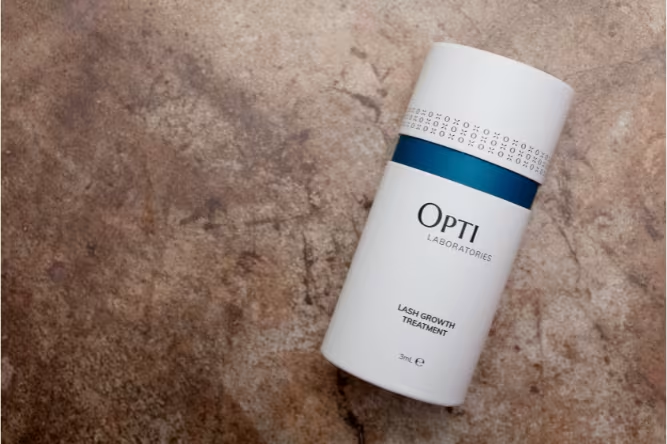
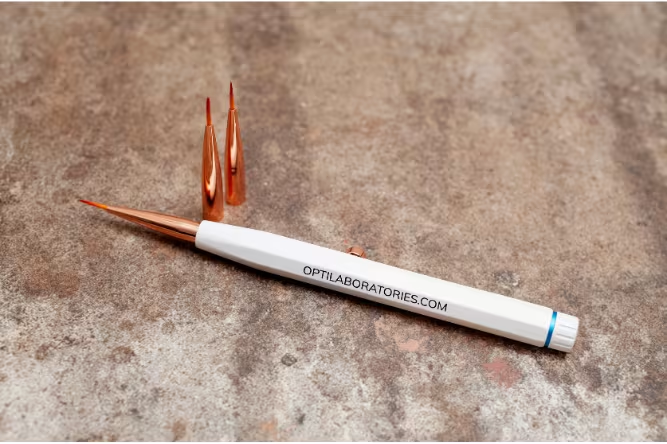
Our growth treatment uses bimatoprost, often called Latisse, which stimulates the hair cycle to encourage hair growth.
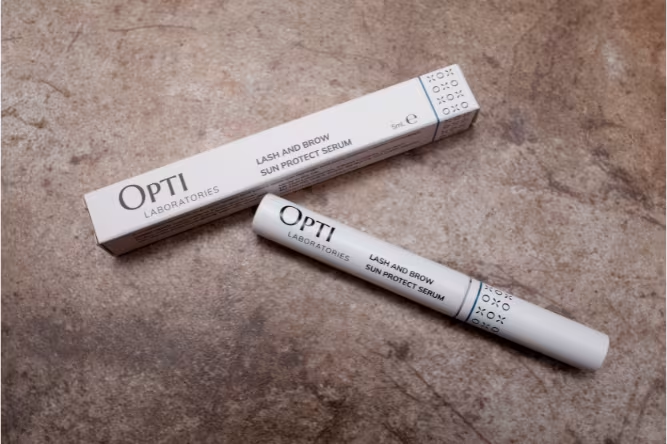
We released the worlds first UV-protective daytime formula, developed to preserve melanin and prevent photo-damage to eyelash and eyebrow hair. In particular, it strengthens and conditions the hair which can help with the dryness and brittleness that commonly occurs with thyroid dysfunction.
Bimatoprost 0.03%, a prostaglandin analogue originally developed for glaucoma, was later shown to enhance eyelash and eyebrow growth by prolonging the anagen (growth) phase and stimulating dormant follicles. It acts locally on the root of the hair to increase both the duration of active growth and the size of the follicle.
Importantly, bimatoprost transforms vellus hairs which are the fine, soft, lightly pigmented “baby hairs” that often remain after thyroid-related thinning. These vellus hairs become terminal hairs, which are longer, thicker, and darker. This conversion can restore visible brow fullness and improves definition.
There are two key studies that illustrate its effectiveness; Kenneth Beer and his collaborators published a randomised double blind study in 2013 that demonstrated an improvement to eyebrows without any side effects. Dr Riahi and Dr Cohen wrote a case report and literature review in 2018 which showed excellent and sustained growth of the eyebrows in their studied patient.
Together, these findings support the use of bimatoprost to stimulate regrowth and enhance recovery after thyroid related eyebrow loss.
Yes. In most cases, regrowth occurs once hormone levels return to normal. As the brow growth cycle lasts roughly four months, visible recovery can take time. The new hairs may also grow in finer or lighter at first before returning to their usual strength.
Using a scientifically validated growth serum or a treatment containing bimatoprost can accelerate this transition, helping fine vellus hairs become mature terminal strands for fuller-looking brows.
Permanent loss is rare. Most follicles remain viable and will regrow once thyroid function is restored, though recovery may be incomplete without topical stimulation.
Typically 3 to 6 months after your hormone levels have settled with appropriate medical treatment. Tull thickness usually returns at least 9 to 12 months later, but it can take longer.
Yes, after you have started the right treatment to control your thyroid problem. Topical treatments help support follicles locally while systemic hormones are being corrected, helping you to grow back your lashes.
Opti Laboratories treatment can safely be used alongside thyroid medication and have been used by thousands of clients over the years. We have had positive feedback specifically from clients trying to regrow their brows after thyroid related thinning.
Hair and brow thinning caused by thyroid imbalance can be distressing, but in most cases it is reversible. Our goal at Opti Laboratories is to help clients not only restore their appearance but to understand the science behind why it happened and to protect their results long term.
If your thyroid levels are now under control but your brows remain thin, we can help.
Explore our scientifically formulated lash and brow serums. They are trusted by our clients recovering from thyroid imbalance, post-chemotherapy changes, and other situations to restore confidence and regrow healthy, full brows.

Castelli E, Fiorella S, Caputo V. Pili annulati coincident with alopecia areata, autoimmune thyroid disease, and primary IgA deficiency: case report and considerations on the literature. Case Rep Dermatol. 2012 Sep;4(3):250-5. doi: 10.1159/000345469. Epub 2012 Sep 14. PMID: 23275769; PMCID: PMC3531941. https://pubmed.ncbi.nlm.nih.gov/23275769/