Factors that slow or block the growth cycle
Understanding what disrupts or slows the lash or brow growth cycle can hep us to take steps to avoid, where possible, detracting factors.
AGEING
As we age our hair follicles undergo changes too. The anagen phase shortens, the follicle decreases in size and the stem cells that are found at the base of the follicle decline – sometimes to the point of exhaustion.
HORMONAL CHANGES
Hormonal levels have broad, system wide effects. For example, a menopausal drop in oestrogen levels impairs Wnt/β-catenin signalling in hair follicles which will impact brow & lash growth too. Thyroid levels are also important for hair growth, with low levels having the particular effect of eyebrow thinning. That is why the use of thyroxine can help recover hair loss if there have been thyroid issues.
AUTOIMMUNE DISEASE
In the context of alopecia areata, involvement of lashes or brows often signals a more severe case.
Over plucking or tweezing, or trauma
Repeated trauma can cause follicles to prematurely exit anagen or even become dormant. This is most commonly from plucking the brows but can also be from force. For example, we have had a client that had a football hit their face and this resulted in a partial shed of their eyebrows and eyelashes on the one side.
Eyelash extensions and tinting
These increase mechanical stress on the follicle which is termed tension or traction alopecia if it begins to slow down or stop the growth cycle. The chemicals employed often chemically damage the hair, releasing free radicals into the body of the hair that can damage the keratin.
Chronic blepharitis, rosacea or eczema
For lashes and brows, anything that causes inflammation at the follicle base can cause growth cycle disruption.
Nutritional deficiency, high stress levels or systemic illness
Generalised hair-cycle slowing (including brows/lashes) happens in telogen effluvium scenarios when the body is under a lot of stress. A nutritional deficiency will also limit the growth cycle if it can not call upon the resources necessary to fully grow.
Medications
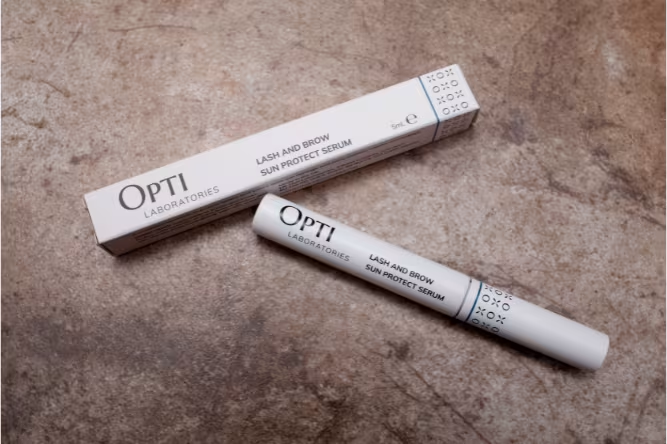
SUN DAMAGE
UV radiation can prematurely induce catagen (transition phase), damage the follicle stem-cell supply, cause oxidative damage to keratin in the hair, and shorten the anagen growth phase. The hair follicles of eyebrows and eyelashes are not as deep as they are on other parts of the body so the damaging UV rays can reach the follicle easier.