If the outer third of your eyebrow has started to thin or disappear, it is not random.
This specific pattern is one of the most recognisable signs of an underactive thyroid. Hypothyroidism eyebrows usually refers to the characteristic thinning of the outer third of the eyebrow seen in some people with an underactive thyroid. This pattern is known as the Queen Anne sign, or Hertoghe’s sign.
It is a recognised clinical sign, but it is not diagnostic on its own. Loss of the outer eyebrow can also occur with ageing, atopic dermatitis, alopecia areata, nutritional deficiency, over-plucking, and other causes of eyebrow thinning. In practice, this is one of the most recognisable patterns we see in patients with thyroid related hair loss. The outer brow is often the first area to change, and the last to recover.
That distinction matters. If your outer eyebrows are thinning and you also have symptoms such as tiredness, weight gain, feeling cold, dry skin, dry hair, constipation or low mood, it is sensible to speak to your GP and ask whether thyroid testing is appropriate.
The important point is that eyebrow thinning can be a visible clue. It is not proof of hypothyroidism, but in the right clinical context it is worth taking seriously.

The thyroid gland produces hormones, mainly T4 (thyroxine) and T3 (triiodothyronine), which influence metabolism, cellular activity and tissue renewal throughout the body. Hair follicles are sensitive to these signals.
Thyroid hormones influence keratinocyte proliferation within the follicle and the duration of the anagen phase. When levels fall, follicles miniaturise functionally rather than structurally, which is why recovery remains possible.
When thyroid hormone levels are low, the hair growth cycle can slow. More hairs may enter or remain in the resting phase, known as telogen, instead of actively growing in the anagen phase. This can lead to hair that becomes thinner, drier, more brittle and slower to replace.
This can affect scalp hair, eyelashes and eyebrows. The outer third of the eyebrow is particularly well known for being affected in hypothyroidism, although the exact reason for this pattern is not fully understood.
In practice, many people first notice that the tail of the eyebrow becomes shorter, lighter or more difficult to define with makeup. Others notice that the brow hairs feel weaker and coarser than before. This is the classic hypothyroidism eyebrows pattern.
Levothyroxine is the standard treatment for hypothyroidism. Its purpose is to replace the thyroid hormone that the body is not producing in sufficient amounts.
When thyroid levels are corrected, hair regrowth often improves. However, this does not usually happen immediately.
Hair follicles work in cycles. Even after thyroid blood tests have normalised, follicles may take several months to move out of the resting phase and begin producing visible new hairs. This is why someone can feel medically better but still see persistent eyebrow thinning. In patients with long standing hypothyroidism, we often see delayed or incomplete brow recovery even when blood tests have normalised.
In long standing or severe hypothyroidism, recovery may be slower and sometimes incomplete. This does not necessarily mean the follicles are permanently lost, but it does mean patience is required.

Although hypothyroidism is a classic cause of outer eyebrow thinning, it is not the only explanation. Before assuming the thyroid is responsible, it is worth considering the wider picture.
| Possible cause | Typical pattern | What to consider |
|---|---|---|
| Hypothyroidism | Often thinning of the outer third of the brow | Consider thyroid symptoms and thyroid blood tests |
| Age-related thinning | Gradual reduction in brow density | Common with age and hormonal change |
| Over-plucking | Patchy or shaped loss in areas repeatedly tweezed | Follicles may recover if still viable |
| Alopecia areata | Patchy, sometimes sudden loss | Requires medical assessment |
| Nutritional deficiency | Diffuse thinning or weaker hair quality | Iron, vitamin D, zinc and general nutrition may be relevant |
| Skin inflammation | Loss with redness, flaking, itching or irritation | May involve eczema, dermatitis or other skin disease |
The first step is always to address the thyroid problem itself. No eyebrow serum can correct an underactive thyroid. If hypothyroidism is present, it needs proper medical management.
Once thyroid function is being treated and stabilised, the focus can move to supporting eyebrow regrowth and protecting the hairs that remain.
There are several possible approaches, but they are not equal.
| Approach | Mechanism | Evidence level | Realistic outcome |
|---|---|---|---|
| Castor oil | Coats and conditions the hair shaft | Weak for true growth | Softer existing hairs, but no reliable evidence of follicle stimulation |
| Peptide or conditioning serums | Improve hair appearance and reduce brittleness | Variable | May improve brow condition, but not usually true regrowth |
| Minoxidil | Can prolong anagen in some hair follicles | Moderate for scalp hair; off-label around brows | May help some users, but must be used carefully around the eyes |
| Bimatoprost-based treatment | Prolongs the active growth phase of the follicle | Strongest evidence for lash growth and supportive evidence for brows | Can improve visible brow fullness where follicles remain viable |
Most cosmetic brow serums condition the existing hairs. That can make the brows look better, especially if the hairs are dry or brittle, but it does not directly address the disrupted hair cycle caused by hypothyroidism.
A bimatoprost based brow treatment works differently. It helps prolong the active growth phase of the follicle. It does not treat thyroid disease, but once thyroid levels are stable, it can help viable brow follicles produce longer, thicker and more visible hairs.

Eyebrows do not regrow overnight. The brow growth cycle is measured in months, not days.
In thyroid-related eyebrow loss, follicles may have spent a prolonged period in a slowed or resting state. Even after thyroid levels improve, visible regrowth can lag behind by several months.
A realistic pattern is:
| Timeframe | What may happen |
|---|---|
| First 1–2 months after thyroid stabilisation | Hair shedding may reduce, but visible brow regrowth may still be limited |
| 3–6 months | Regrowth may become more noticeable if follicles remain viable |
| 6–12 months | Fuller recovery may continue, although some people remain thinner than before |
| With targeted brow support | Some people may see improved brow density and definition, especially where fine hairs are still present |
This is why I usually advise people not to judge too early. If the underlying thyroid problem has been longstanding, the brows often need a full cycle of recovery before the result can be assessed properly.

At Opti Laboratories, we specialise in eyelash and eyebrow growth. We have helped many clients with thinning brows, including those recovering from thyroid related eyebrow loss, chemotherapy related lash and brow loss, over-plucking, trichotillomania and age related thinning.
The Opti Laboratories Brow Growth Treatment is designed to support regrowth where follicles remain viable. It uses bimatoprost, a prostaglandin analogue, to help prolong the active growth phase and improve the appearance of sparse brows over time.
Our Sun Protect Serum can also play a useful supporting role. Hypothyroidism can leave hair drier, weaker and more brittle, and UV exposure can further damage the hair shaft. The Sun Protect Serum was developed as the world’s first UV-protective serum for lashes and brows, helping protect fragile hairs while improving condition.
For many people, the sensible approach is:
First, stabilise the thyroid problem with your doctor. This creates a gap: the thyroid problem is medically treated but the cosmetic outcome, the eyebrows, often remains unresolved.
Second, support regrowth where the follicles are still viable. That is the point at which targeted follicle stimulation becomes relevant.
Third, protect the new and existing brow hairs from avoidable damage.
You should speak to your GP if eyebrow thinning is new, progressive, sudden, patchy, or associated with other symptoms of thyroid disease.
Useful tests may include thyroid function tests, and depending on your situation, checks for iron, ferritin, vitamin D, B12, zinc or other factors involved in hair health.
It is also important not to change thyroid medication without medical advice. Levothyroxine and related treatments should be adjusted by your doctor based on symptoms and blood tests.

Hypothyroidism eyebrows can be distressing because the outer brow is so important to facial expression and definition. Even a small loss at the tail of the brow can change how the whole face looks.
The good news is that thyroid related eyebrow thinning is often recoverable, but it requires the right order of priorities.
Treat the thyroid condition first.
Allow time for the follicle cycle to recover.
Then consider targeted brow growth support and protection if the brows remain thin.
At Opti Laboratories, this is exactly the kind of problem we understand well: not simply as a beauty issue, but as a hair-cycle problem affecting an important part of the face.

Our clinically proven, prescription strength growth treatment has been our gold standard treatment since we started in 2007.
Trusted by over 37,000 clients.
Each pack includes the treatment and the applicators, which lasts most people three months with careful usage.
£120.00


Once any underlying medical or nutritional cause has been addressed, many people want to regrow their lashes and eyebrows.
Opti Laboratories are the eyelash and eyebrow growth experts. We believe that night time behaviours are under-recognised and that simple interventions can make a measurable difference.
Our clients include individuals recovering after:
▪️Thyroid related brow loss
▪️Chemotherapy related eyelash thinning
▪️Trichotillomania and related issues
▪️Cosmetic over plucking
▪️Eyelash and eyebrow loss from radiotherapy
▪️Thinning eyelashes due to medications
However, we also help a lot of people that simply want longer eyelashes and thicker eyebrows too.
Based in the UK and led by a team of British doctors, we have helped thousands of clients. since 2007 and we have been recognised in UK newspapers and magazines.
We continue to innovate. Our award-winning daytime lash and brow serum, the first in the world to offer UV protection for lashes and brows, supports growth and helps protect fragile follicles during your recovery.
This article is intended for educational purposes and does not replace individual medical assessment. Persistent or unexplained eyelash or eyebrow loss should be evaluated by a qualified healthcare professional.


The growth treatment and the sun protect serum
£169.00

The ONLY clinically-proven growth treatment. Also available for brows.
£120.00 (3 month supply)
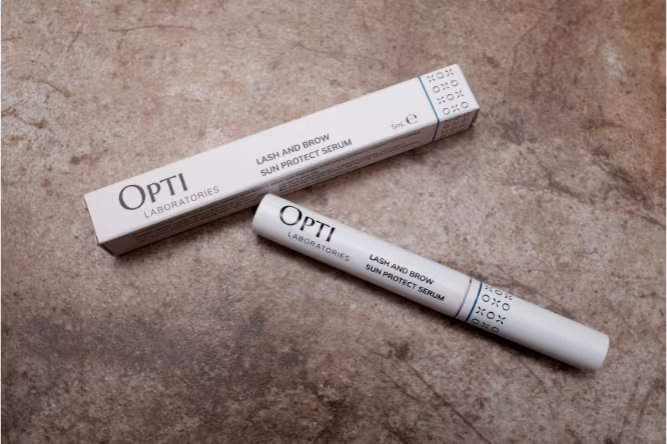
The world’s first lash and brow serum to protect from sun damage.
£59.00
Hypothyroidism eyebrows usually refers to thinning of the outer third of the eyebrows in people with an underactive thyroid. This pattern is known as the Queen Anne sign or Hertoghe’s sign, although it is not specific to thyroid disease.
Yes. Hypothyroidism can disrupt the normal hair growth cycle, causing eyebrow hairs to become thinner, drier, more brittle and slower to replace. The outer third of the eyebrow is a classic area where this thinning may appear.
In many cases they will, but regrowth can be slow. Even after thyroid blood tests normalise, eyebrow follicles may take several months to leave the resting phase and begin producing visible new hairs again.
Early regrowth may be seen after 3 to 6 months once thyroid levels are stable, but fuller recovery can take 6 to 12 months. The timing depends on age, duration of thyroid imbalance, nutrition and whether the follicles remain viable.
No. The Queen Anne sign is a useful clinical clue, but it is not diagnostic by itself. Outer eyebrow thinning can also occur with ageing, eczema, alopecia areata, nutritional deficiency, over-plucking and other causes.
Bimatoprost does not treat hypothyroidism, but it may help support cosmetic eyebrow regrowth once thyroid disease is medically controlled. It works by prolonging the active growth phase of viable hair follicles.
The priority is to stabilise thyroid function with your doctor. A brow serum may help support cosmetic regrowth, but it should not be treated as a substitute for proper thyroid diagnosis and treatment.
Gentle grooming, good nutrition, avoiding over-plucking and reducing friction can all help. UV protection may also be useful because sunlight can weaken and dry the hair shaft, particularly when brow hairs are already fragile.