Model with long lash growth

Evidence-based guide · UK doctor-led since 2007

Regrowing your lashes and
brows after chemotherapy.

Losing your lashes and brows is one of the most emotionally difficult parts of treatment.

We’ve been helping people through exactly this since 2007 — and we’re here to help you too.

tw

Dr Tom Walker

Medically reviewed · Founder, Opti Laboratories · October 2024

We’ve supported over 15,000 clients with lash and brow regrowth — many of them post-chemotherapy — since 2007. You’re in the right place.

as seen in

Vogue logo
Elle logo
Grazia Logo
Cosmopolitan logo
Marie Claire logo

The first question everyone asks

Will my lashes and brows grow back?

In most cases, yes. Hair follicles are not permanently destroyed by most chemotherapy regimens. When treatment ends, the follicles can recover and regrowth begins — though the timeline varies considerably from person to person.

Lashes and brows often lag behind scalp hair because of their shorter growth cycle. This is one of the most common reasons people seek additional help — and one of the things we do best.

What if my regrowth is incomplete?

A small number of people experience persistently sparse regrowth, particularly after combined chemotherapy and radiotherapy. Bimatoprost — the clinically proven treatment we use — has been specifically studied in post-chemotherapy patients and shown to be effective even in these cases.

What to expect

The regrowth timeline.

Everyone’s journey is different. This is the general pattern we see in our patients.

2 weeks after treatment ends

The earliest most people can begin bimatoprost treatment. A medical assessment is always required before starting.

3–6 months

Initial regrowth visible for most people. Fine, lighter hairs typically emerge first. This phase can feel slow — consistency matters.

6–12 months

Substantial density and length returning. With bimatoprost, many patients see results significantly beyond their pre-treatment state.

12–18 months

For those with slower regrowth — particularly after combined therapy — continued treatment brings meaningful improvement. Our longest-serving patients have used the treatment for over 13 years.

CLIENT RESULTS

REAL TRANSFORMATIONS.

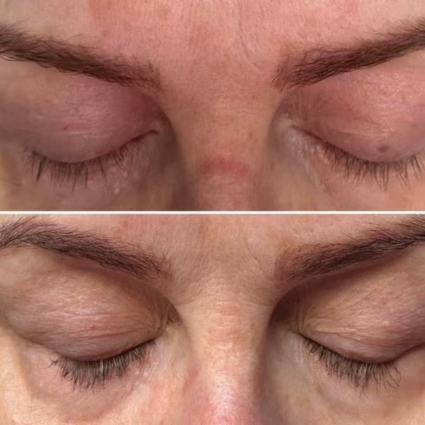
Client before and after photo of lash and brow growth
BEFORE
WEEK 16

Ellie – Client transformation

Lash and brow use

16 weeks

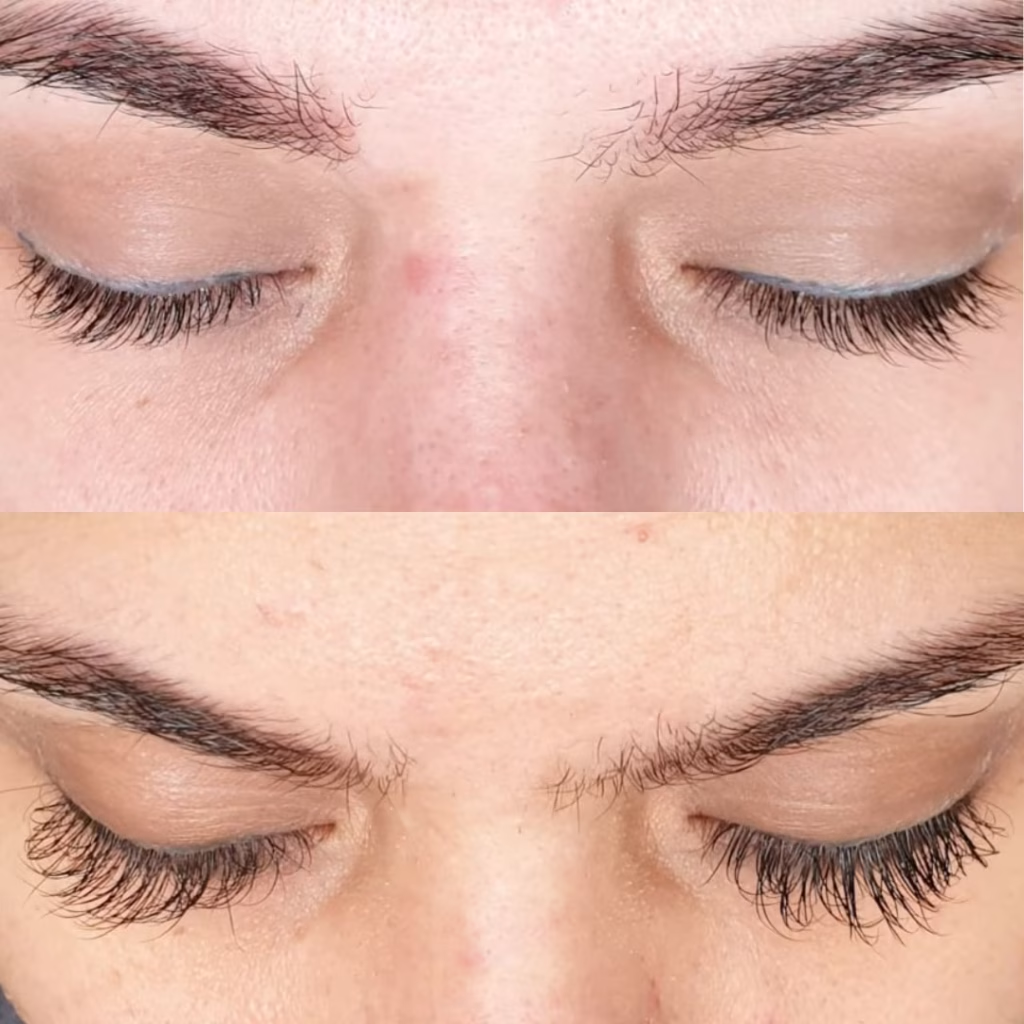
A "before and after" client picture
BEFORE
WEEK 16

Client transformation

Lash and brow use

16 weeks

A real customer before and after picture, showing the results of Opti Labs use over 2 months.

Alison – Client transformation

Lash and brow use

16 weeks

Client before and after photo of lash growth

Client transformation

Lash and brow use

16 weeks

Published in Grazia magazine

Grazia Logo

“Without eyelashes and brows I found my face had no definition. My reflection was blank: I looked like a boiled egg.”

After five months of chemotherapy for ovarian cancer, beauty editor Becky Gee turned to Mylash — now Opti Laboratories — to rebuild her lashes. Six weeks later they were 25% longer. Within three months, 100% thicker. “They looked better than they did before I was ill.”

“Without being able to pinpoint exactly what’s changed about me, friends tell me I’ve got the twinkle back in my eye. And when I see my new eyelashes in the mirror, I finally look like me again.”

Becky Gee · Beauty Editor, Grazia

Opti Laboratories client · Post-chemotherapy (ovarian cancer)

Post-chemotherapy · Verified customer

"My eyelashes have genuinely grown back even longer than they were before they fell out."

“Everyone has been complimenting me on them. They are noticeably long and thick looking. Really highly recommend to anyone who has lost lashes.”

Sophie C · Verified customer

Post-chemotherapy lash loss

Post-chemotherapy · Verified customer

"For the first time in a long time, I feel genuinely confident again."

“I had chemotherapy last year. My lashes had been significantly affected. But since using this treatment they’ve grown stronger and healthier over time — I now have noticeably longer, fuller lashes.”

Claire B · Verified customer

Post-chemotherapy and ongoing medication

The impact

Why chemotherapy and radiotherapy affect eyelashes and eyebrows​

Most chemotherapy drugs work by targeting rapidly dividing cells, slowing down their division to prevent the growth and spread of cancer. Hair follicles are complex structures that continually pass through a growth cycle to produce hair. When cancer treatment interrupts the hair growth cycle then lashes and brows fail to grow correctly and often shed prematurely.

Radiotherapy to the head or face can compound this effect by directly damaging follicular stem cells, making recovery slower and more unpredictable. When both are combined then the chance of lash or brow loss increases.

Importantly, eyelashes and eyebrows have shorter growth cycles than scalp hair. This means that they often fall out earlier during treatment due to the shorter cycle. However, this also means that when regrowth occurs it can be relatively quick compared to the scalp. 

The treatment

Why bimatoprost works after chemotherapy.

Bimatoprost is the most studied and clinically supported treatment for lash and brow regrowth — and the most studied compound specifically for post-chemotherapy regrowth.

Extends the growth phase

Bimatoprost prolongs the anagen phase — allowing recovering follicles to produce longer, denser hairs before shedding.

Clinically proven in post-chemo patients

FDA approval specifically includes use for hypotrichosis — reduced hair growth — after chemotherapy. It is well understood and can be used long term.

Works for eyebrows too

Clinical studies and our own long-term experience show meaningful eyebrow regrowth for post-chemotherapy patients using bimatoprost.

Bimatoprost has FDA approval for cosmetic lash growth and has been specifically shown to be effective in patients with post-chemotherapy hypotrichosis.

Before you start

Using bimatoprost safely after treatment.

We always recommend individual medical assessment before starting. Here is the general guidance our doctors follow.


When to start

In most cases we recommend starting two weeks after chemotherapy or radiotherapy has completely finished and acute side effects have resolved. Your doctor will advise if a longer wait is appropriate.

What to expect

When used appropriately the treatment is generally well tolerated. The most common side effects are mild and localised — temporary redness or irritation at the application site. These usually resolve quickly.

Doctor supervision throughout

Every client completes a medical form reviewed by a UK-registered clinician. This excludes rare contraindications and ensures you apply the treatment correctly for best results.

We recommend stopping bimatoprost during any active cancer therapy. Chemotherapy suppresses growth cycles in cells — the treatment acts to accelerate growth, so the two work against each other. Always discuss with your oncologist before starting any new treatment.

Why choose us

Why Opti Laboratories.

Doctor-led UK service since 2007

We’ve been supporting post-chemotherapy patients for nearly 20 years. You’re not an edge case — you’re one of thousands we’ve helped.

UK-registered pharmacies only

All prescriptions are fulfilled by UK-registered pharmacies. We strongly advise against purchasing bimatoprost without a doctor’s supervision.

Real clinical experience

We regularly review the scientific literature, publish our own research, and commission external studies — so our advice reflects the current evidence, not marketing.

Free UK delivery

Every order delivered free to your door. No minimum spend. Doctor consultation included in the cost.

Related reading

Other causes we treat.

Trichotillomania


Cosmetic over-plucking

Thinning from radiotherapy

Medication induced thinning

Common questions

What patients ask us.

Written and reviewed by

as seen in

Vogue logo
Elle logo
Grazia Logo
Cosmopolitan logo
Marie Claire logo

We're here when you're ready.

Our doctors have helped thousands of people restore their lashes and brows. We can help you too — in your own time, at your own pace.