A balanced, evidence-based resource from UK doctors on supporting cosmetic regrowth alongside behavioural management. You are not alone, and regrowth is possible.
Dr Tom Walker
Medically reviewed · Founder, Opti Laboratories · October 2024
When pulling behaviour decreases or stops, most hair follicles remain viable. Natural regrowth often occurs over weeks to months, and clinical treatments can support that process further. Many of our clients see their lashes and brows restored to where they were before — and sometimes beyond.
Trichotillomania is a behavioural condition that leads to repetitive hair pulling, particularly of the eyelashes, eyebrows and scalp. People often describe a feeling of tension relief immediately after they pull but this is usually followed by guilt or anxiety, which perpetuates the cycle.
This problem is very different from alopecia or other causes of hair loss because the underlying problem is behavioural rather than a problem affecting the follicle health.
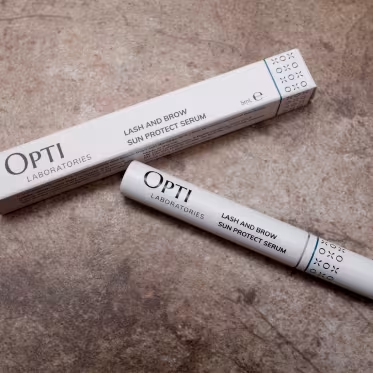
I have been using the MyLash treatment as often as I can for the last 13 years, and very recently started adding the Opti Laboratories Sun Protect Serum to my routine and I am thrilled with the results.
My journey to using MyLash involved several decades as a Trichotillomania (compulsive hair pulling) sufferer, which for me played out mostly on my eyelashes. As someone who was born with dark brunette, thick eyelashes, I had done so much damage that parts of my eyelid had no lashes left at all.
Using MyLash not only helped me to grow back my lashes, but also to keep them, and over time they have restored back to nearly the strength they were pre-pulling. The only issue I had left was that the lashes didn’t grow in such a uniform “fan” shape. I used LVL treatments to give a better result here, but these treatments are drying, and whilst I would enjoy a few weeks of brilliant looking lashes, getting lots of comments, there would then follow weeks where the lashes looked dry and spindly. The Opti Laboratories serum has completely resolved this! The deeply conditioning qualities of the serum mean not only do the lashes stay hydrated and keep their form, the LVL effect lasts longer, I am still feeling the benefits of it 9 weeks after my last treatment.
The Opti Laboratories Serum also works wonderfully on brows, not only being a great residue-free brow gel but also having the same benefits– my brows are appearing fuller and darker after being over plucked in decades gone by!
I am so grateful to have these products – they are without question two of the best beauty products I have ever invested in in terms of results, you have to use them for them a few weeks, but the results from there are undeniable.
Lashes and brows regrow after trichotillomania almost all the time. When the pulling behaviour decreases or stops you will find that most hair follicles remain viable and natural regrowth often occurs over weeks to months. However, frequent and persistent pulling can eventually cause enough trauma to the follicle to cause it to enter a quiescent state where is pauses growth for a while.
In clinical practice many people report initial regrowth within the first 6 to 12 weeks but substantial cosmetic improvement can often take 3 to 6 months to come through.
Patients using treatments to help support regrowth often perceive results sooner, reinforcing therapy adherence.
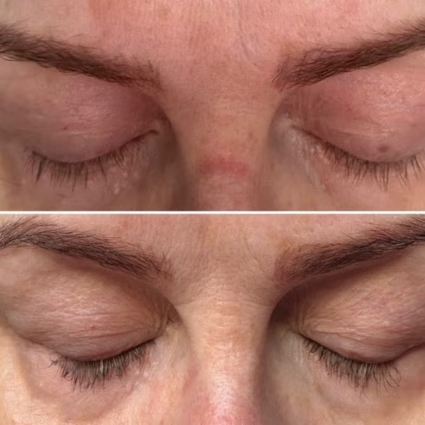
Ellie – Client transformation
Lash and brow use
16 weeks
Client transformation
Lash and brow use
16 weeks
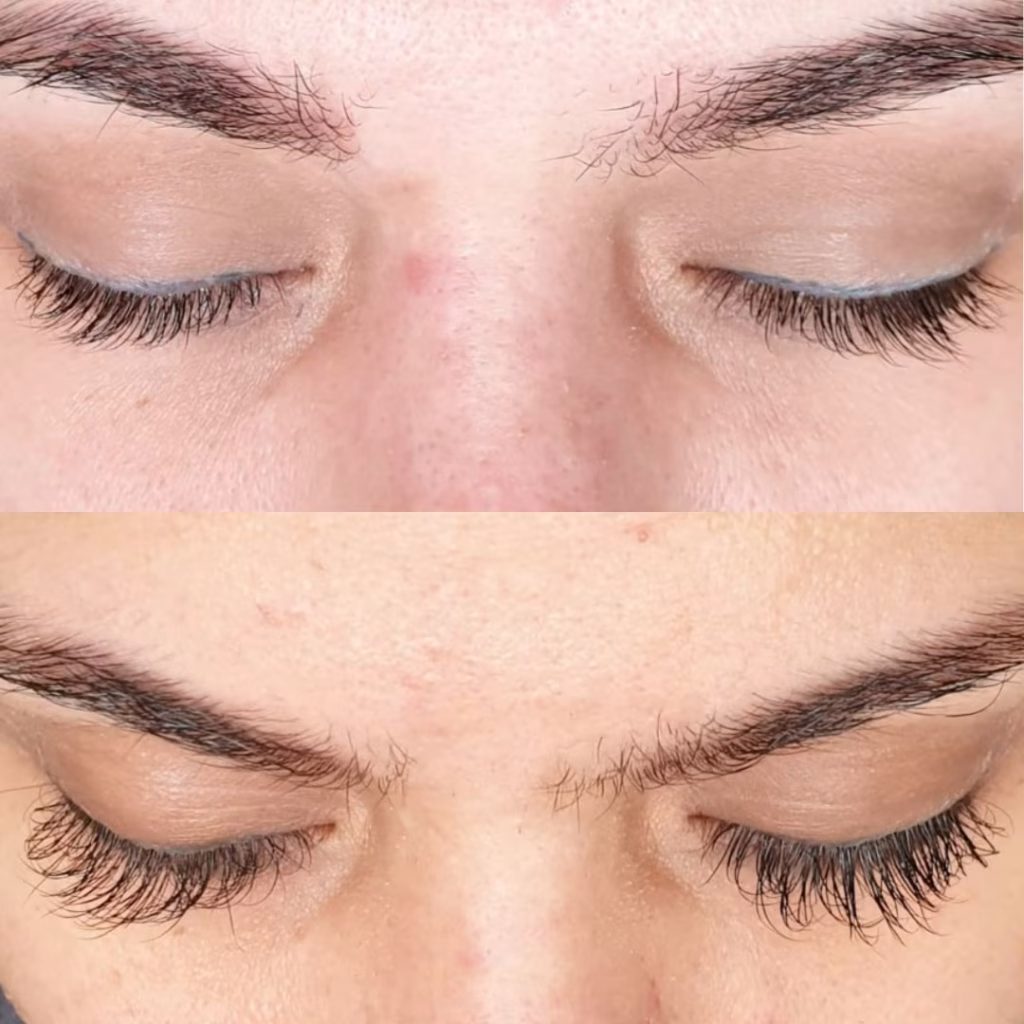
Alison – Client transformation
Lash and brow use
16 weeks
Client transformation
Lash and brow use
16 weeks
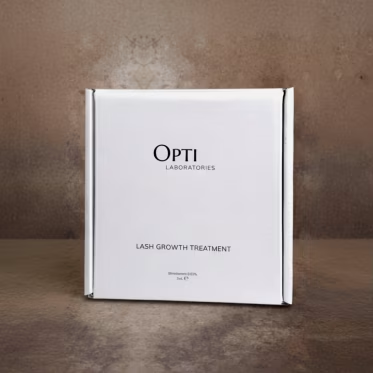
Bimatoprost is a prostaglandin analogue used for helping eyelash & eyebrow growth. In America it comes under the Latisse® brand and it is the active ingredient in our growth treatment. Medical studies carried out over the past 20 years have shown it to be an effective way to stimulate eyelash and eyebrow growth.
It works by stimulating the hair growth cycle when applied to the skin, where it soaks into the hair follicle. It also stimulates the production of melanin, and the resulting effect of the treatment is to grow hairs that are longer, thicker, and darker. Unfortunately, it does not work with scalp hair loss because it does not reverse the process that has caused the scalp hair to come under attack.
There are limited large-scale studies specifically on bimatoprost and trichotillomania. However, extensive FDA-approved evidence supports its use for lash and brow regrowth generally, and our doctors have helped many patients with positive outcomes over 18 years.

Effective management of trichotillomania should begin with a visit to your GP to begin long term treatment. There is no quick fix or miracle cure. Your GP will discuss the condition and that will be the start of a plan to work on strategies to control the pulling and hopefully address any underlying causes.
Trichotillomania is a complex condition and we still do not truly understand all of the mechanisms involved. It is likely to involve our response to stress, general mental health, family history and genetics amongst other things – there are some specific gene markers that have been proposed.
The most common treatments are often called talking therapies. They often fall into two main categories. The first category hopes to give you ways to identify things that trigger pulling, as well as habits or actions to do instead pulling a hair such as flicking a band on your wrist. Cognitive behavioural therapy is an example of the second category, which looks into underlying motivations or thought processes that may have led you to a point of anxiety that has resulted in pulling taking place.
Cosmetic regrowth support can be motivational, helping some people stay committed to behavioural change. When healthy, thick hair is starting to come through then it can help some people more hesitant to pull at it. However, it must be stressed that it would be inappropriate to start any treatments to regrow hair that has been damaged by trichotillomania if there are not therapies in place to try to manage the pulling.
After chemotherapy
Cosmetic over-plucking
Thinning from radiotherapy
Medication induced thinning
These articles explain trichotillomania, night-time rubbing, hair breakage, lash and brow structure, and the evidence behind treatments that may support cosmetic regrowth.
Yes. Once pulling behaviour is controlled, most hair follicles remain viable and natural eyelash and eyebrow regrowth usually occurs over weeks to months.
Bimatoprost can enhance hair growth by prolonging the anagen phase and increasing follicle activity, supporting thicker, longer lashes and denser brows, but it does not treat the underlying compulsion.
No. Trichotillomania requires behavioural and psychological management. Bimatoprost may support cosmetic regrowth but does not address the cause.
Visible cosmetic improvement can occur over 8–16 weeks, but timelines vary and results depend on consistent use and reduced hair pulling.
When prescribed through a UK doctor and used correctly, bimatoprost is generally well tolerated, but it should be part of a wider management plan including behavioural therapy.
Once behavioural therapy is in place, our clinically proven treatments can support cosmetic regrowth.
Our doctors have helped thousands of people restore their lashes and brows. We can help you too — in your own time, at your own pace.