Trichoclasis: Why Eyelashes or Eyebrows Break While You Sleep
Finding eyelashes or eyebrows on your pillow? Learn how trichoclasis and trichorrhexis nodosa cause hair breakage — and how to protect lashes and brows overnight.

Eyelashes and eyebrows are small hairs with a big job. They protect the eye, shape facial expression, and display to the world how rested or how “well” we look.
If you already protect your skin from the sun then it is sensible to consider how you are protecting your eyelashes & eyebrows from UV damage.
We explain what UV rays from the sun can do to lash and brow hairs, how to use UV protection for eyelashes & eyebrows that is practical and eye safe, and how to keep them looking the best they can be. If you tint, lift, laminate or wear extensions then we can help you keep the results lasting longer.


Most people know that UV rays from the sun are bad for their skin. UVA radiation penetrates deeper into the skin, damaging collagen and elastin which leads to wrinkles and other signs of photoageing. UVB is higher energy but does not penetrate as deep, but causes sunburn. We know that it damages the skin but hair is also damaged by exposure to UVA and UVB in sunlight.
For both skin and hair, we have melanin which helps to soak up some of the UV which gives protection. Like skin it also provides colour. When a melanin granule absorbs the UV energy it changes shape, which makes it appear lighter.
For lashes and brows, UV damage is most commonly seen as:
This matters functionally. Eyelashes help protect the ocular surface by preventing dust entering the eye, and also acting as a sensor to force you to blink if a foreign object contacts the sensitive lash hair. Eyebrows help protect the eye region and deflect water away from the eyes.
Cosmetically they are also very important. They frame the face, allowing expression and form part of how we view ourselves. Eyelashes and eyebrows are an important feature for all of us.
Learn more from our articles:
Finding eyelashes or eyebrows on your pillow? Learn how trichoclasis and trichorrhexis nodosa cause hair breakage — and how to protect lashes and brows overnight.

Eyebrow Structure and Function Explained – The Science Behind Beautiful Brows

Beneath the delicate appearance of the eyelash lies an intricate structure that has evolved to balance protection with resilience.
Although everyone would benefit from using more sun protection, we have identified some key groups:
Step 1: Minimisation
The best sun exposure is limited sun exposure. That doesn’t mean that you should completely avoid sunshine, but you should take steps to enjoy it sensibly.
Step 2: Protect the skin and hair
Whenever you are exposed to the sun you should wear sun protection.
Although many makeups now contain SPF, it is still best to apply a dedicated sunscreen. This should be applied at least during the summer months but more people are starting to wear SPF year-round, even in the UK and other less sunny countries. The sun may not feel as strong but the UVA exposure will still have a photoageing effect.
Be careful when applying sunscreen around the eye. Apply it careful and don’t forget to apply below the brow and also to the eyelids.
Try to keep your hair out of the sun and consider using a product that contains UV protection.
Step 3: Add lash and brow sun protection
If you want to protect the hair fibre itself then consider a dedicated lash & brow UV product that is designed to:
Opti Laboratories Sun Protect Serum was developed by UK doctors for this exact purpose: protecting lashes and brows from UV exposure while conditioning and supporting healthy growth.
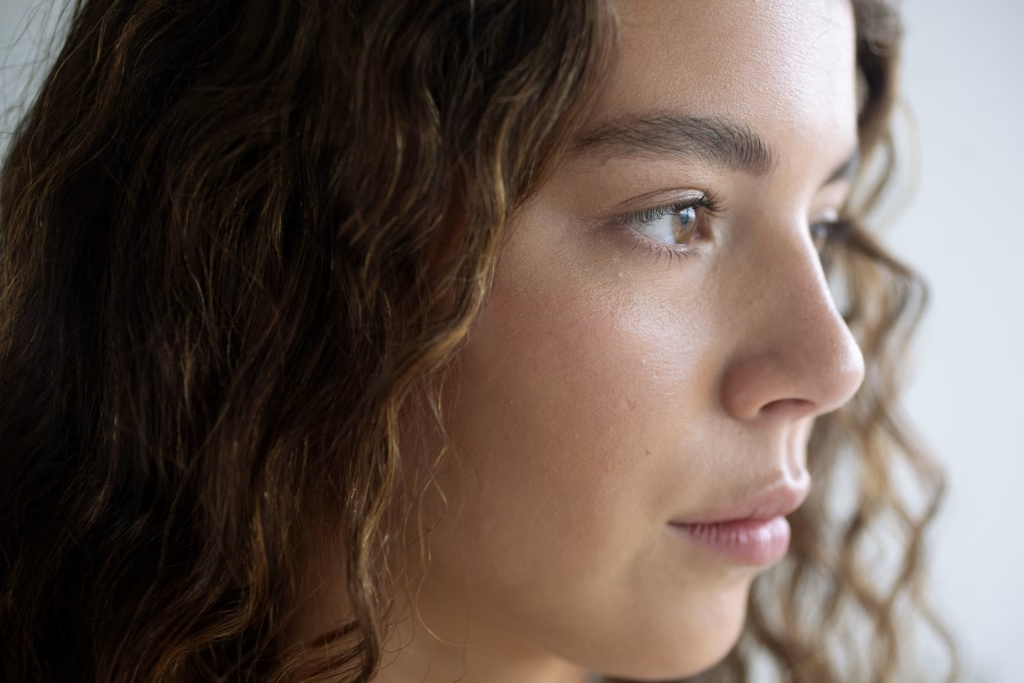
The science
When we have a lash lift, the lifting solution breaks down disulfide bonds. These are links found in the cortex of the hair that connect strands of keratin together. The perming solution is then applied which causes the disulfide bonds to reconnect. The eyelash takes the new shape, locked into the curve that was set by the technician.
UV rays from the sun damage disulfide bonds, eventually breaking the bonds. If you’ve had a lash lift, then high levels of sun exposure will break down the lift quicker.
A similar process happens when tinting the eyelashes. A perming solution opens up the cuticle and bleaches the melanin. A dye is then applied which binds to the existing melanin. A slightly acidic oxidiser is used to neutralise any remaining peroxide and causes the dye to bind to the melanin granules.
As the melanin is exposed to sun it absorbs the UV energy. This breaks down the dye back to smaller component parts that are not as visible, causing the colour to fade.
Protection
Knowing the science, there are additional steps you can take to get more out of a lash & tint:
These articles explain UV damage, eyelash and eyebrow structure, melanin, the hair growth cycle, and the evidence behind lash serums and protective treatments.
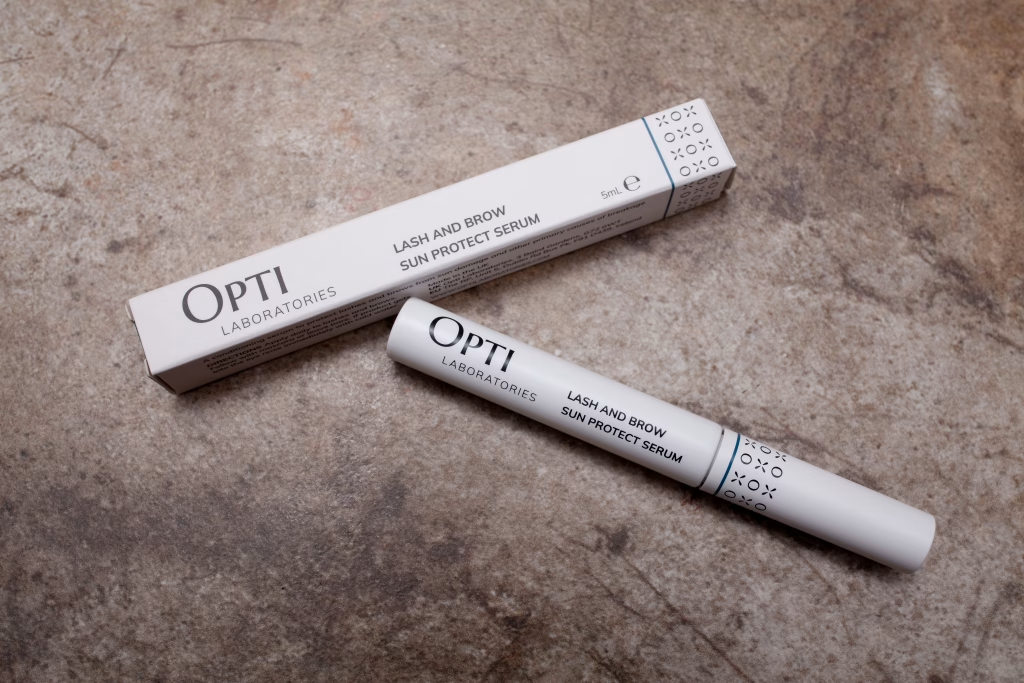
The first in the world to protect against sun damage: the primary causes of lash breakage and brow thinning.
The lightweight formula also conditions and hydrates to encourage healthy growth, and contains soothing ingredients to reduce eye irritation. Added bonus? It’s a fab primer for mascara and brow pencil.
Opti Laboratories carries out our own research into lash and brow growth. We have a large client base which puts us in a unique position to be able to monitor and review people that have used our treatments over the long term, with some clients being with us for close to 20 years. The relationships that we have developed with clients and with industry experts allows us to continually innovate.
Our sun protect serum was a product of that innovation.
We knew sun was the most common cause of damage to eyelashes and eyebrows, but there was no product available to provide protection. We developed a gentle but effective solution that protects the lashes + brows from the sun, while also conditioning the hairs and supporting growth.
As a science led company, we carried our original research to prove the effectiveness. We ran a trial using scanning electron microscopy to show that our serum protected the hairs when exposed to the sun. The results were better than we expected and they prove that our serum provides significant protection from the sun.

We published our research paper in the ChemRxiv journal with all the data and supporting images that we used to support our conclusions. The full paper can be found here: https://chemrxiv.org/doi/full/10.26434/chemrxiv-2025-w19vz
We followed up this research with a clinical study looking at the success rates of clients using the Opti Laboratories lash + brow sun protect serum. This currently unpublished work shows that clients that protect their lashes and brows from UV damage report high levels of satisfaction with the results.
This level of insight stands Opti Laboratories apart from our competitors. The research that we conduct allows us to show that the results from our serum are clinically proven in practice, as well as scientifically proven by the electron microscopy results.
Opti Laboratories is a doctor led UK company focused on lashes and brows. We are the UK experts for eyelash and eyebrow growth.
We regularly support:
Yes. Hair fibres are exposed to the sun and UV exposure from sunlight is associated with hair “weathering” (physical and chemical degradation) that can present as dryness, brittleness, fading and breakage. Eyelash and eyebrow hairs are smaller but still made of keratinised fibre structures that have been shown to be damaged by UV exposure.
UV exposure can degrade hair proteins and pigments and contributes to free-radical processes that damage hair structure; sources describe UVB as more associated with protein loss and UVA as more associated with colour change, alongside cuticle-surface disruption seen in microscopy studies
For the lash and brow area, physical barriers are the safest high-impact first step because they protect eyelids, eyes, lashes and brows at the same time. UK and international guidance strongly emphasises combining shade, clothing and sunglasses that provide full UVA+UVB protection as part of sensible UV risk reduction.
Typically no. Sunscreen is formulated for skin, and migration into the eye can sting or irritate. Protect the area first with sunglasses and a hat if possible, and if you use products near the eyes, choose options intended for sensitive eye areas.
Yes. UV is well described as a driver of hair colour change and hair damage. That makes it reasonable to treat high UV exposure as a potential contributor to faster fading and a “drier” feel, particularly if hair is already stressed by cosmetic treatments.
Direct comparative studies on sun exposure with eyelash extensions are limited. However, eyelash extension adhesives commonly contain cyanoacrylate, and cyanoacrylate/adhesive performance can be negatively affected by ultraviolet light exposure. In practical terms, minimising sun exposure often helps prolong the life of extensions.
Yes. International guidance warns not to underestimate UV passing through clouds, and UK public-health guidance encourages checking UV levels and protecting against the sun when UV is significant. There is also growing evidence that year round UV minimisation helps slow down photoageing.
Opti Laboratories’ most direct evidence is a 2025 journal article in ChemRxiv studying eyelash hair under UV exposure with electron microscopy based measurements, reported with funding and competing-interest disclosures and labelled as not peer reviewed at the time of posting. This should be interpreted as early laboratory evidence alongside the wider independent body of hair photodamage research.
Hair has no repair mechanism, so any damage to the hair is permanent until the full hair is replaced. The sun is the most common source of hair damage, so using UV protection for the lashes and brows helps keep them looking their best.