Retinoids and Eyelash loss

Vitamin A, Retinoids, and Eyelash/Eyebrow Loss: What to Know

At Opti Laboratories, our doctors frequently advise clients who’ve noticed eyelash or eyebrow thinning while using vitamin A–related medicines (e.g., isotretinoin for acne) or high-dose vitamin A supplements. Retinoids are among the most effective topical anti-ageing and acne therapies available—but at the same time, excess systemic vitamin A can hinder hair growth. This article separates the cosmetic wins from the hair-health caveats, with special attention to lash and brow changes. Read on, or for a quick overview watch our TikTok video.

@opti.labs

Retinoids are the gold-standard topical anti-wrinkle treatment. But what are they doing to our lashes? Dr Tom Walker, an expert in lash and brow growth, gives an overview. Retinoids derive from vitamin A, something to which hair follicles are exquisitely sensitive. Adequate vitamin A can support normal follicle function, but excess vitamin A (such as from oral retinoids or high-dose supplements) can cause lash and brow loss. The exact mechanisms for that loss are still unclear; at high levels vitamin A appear to shorten the hair's growth stage and push them into their resting or shedding phase. Retinoids may also influence other functions resulting in hairs which are more brittle and fragile. There have been a number of studies noting this effect. Does this mean you need to throw away your over-the-counter retinol? Absolutely not, retinols are a less potent than prescription retinoids and used correctly are less likely to result in lash or brow loss. You should also never stop taking a prescribed retinoid without speaking to your dermatologist. But if you are experiencing any lash or brow loss while taking retinoids, check out our full article on the subject here: https://optilaboratories.com/2025/09/11/retinoids-and-eyelash-loss/

♬ original sound - Opti Laboratories

Vitamin A & Retinoids: the cosmetic upside

Vitamin A is a family of compounds (retinol, retinal, retinoic acid and synthetic analogues) that regulate keratinocyte turnover and collagen signalling in skin. In aesthetics:

Topical tretinoin (retinoic acid) has robust evidence for photoageing: it improves wrinkles, mottled pigmentation and sallowness and remains the most studied topical anti-wrinkle active.

Comparative analyses suggest retinoids (retinol/tretinoin/tazarotene) are among the best-in-class topical options for fine lines, with favourable overall safety when used correctly.

Bottom line: for skin, retinoids are outstanding. Used appropriately, they’re the gold-standard topical anti-wrinkle treatment.

Picture of model showing lash and brow growth

Vitamin A Derivatives and Photosensitivity

One important consideration with retinoids (both topical and oral) is that they can make the skin more sensitive to sunlight. This is especially relevant around the eyes, where the skin is thin and delicate.

Mechanism: Retinoids increase epidermal turnover, thinning the stratum corneum (outer protective layer) and exposing newer keratinocytes to UV radiation. This lowers the natural barrier function of the skin against sunlight.

Clinical effect: Patients may notice they burn more easily or develop redness and irritation with even moderate sun exposure. This effect is well described in both dermatology literature and clinical practice.

Cosmetic relevance: For clients using retinoids as part of anti-ageing care, sun protection is non-negotiable. Without it, UV exposure can negate the very collagen-preserving benefits retinoids are meant to provide.

Practical advice:

Use a broad-spectrum SPF daily (at least SPF 30, ideally 50).

Avoid applying retinoids in the morning — night-time application is standard.

Around the eyes, stick to retinoid formulations specifically designed for periocular use, and keep them off the lash line.

Sunglasses with UV protection further safeguard the delicate eyelid area.

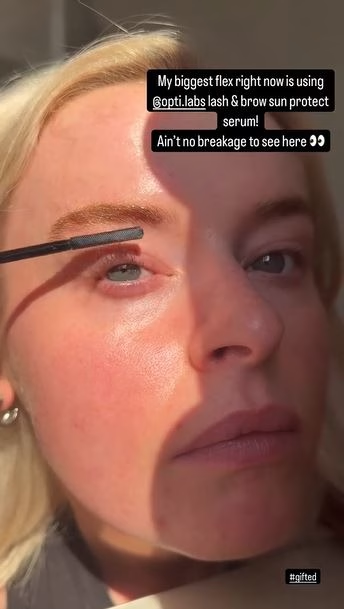
Use the Opti Laboratories Sun Protect Serum to protect your eyelashes & brows, to help maximise growth.

Key message: Retinoids are outstanding for anti-wrinkle care, but they demand consistent photoprotection. For clients also concerned with lashes and brows, it’s worth remembering that excessive UV can damage follicles too — making UV-blocking strategies doubly important.

Where things get complicated: hair, lashes, and brows

Hair follicles are exquisitely sensitive to vitamin A levels and this can lead to a paradox:

▪️Adequate vitamin A supports normal follicle function.

▪️Excess vitamin A (from oral retinoids or high-dose supplements) can trigger telogen effluvium and madarosis (loss of brows/lashes).

How might vitamin A cause eyelash and eyebrow loss?

The exact mechanisms are not fully understood, but several pathways are thought to explain why excess vitamin A or systemic retinoids can lead to hair shedding, including the brows and lashes:

Premature transition to the telogen phase

Vitamin A and its derivatives regulate keratinocyte differentiation in the hair follicle.

At high levels, they appear to shorten the anagen (growth) phase and push follicles into telogen (resting/shedding), leading to diffuse thinning or lash/brow shedding.

Altered stem cell and keratinocyte signalling

Retinoids influence pathways such as Wnt/β-catenin, which are essential for follicle cycling. Overstimulation may dysregulate normal follicle renewal, making hairs more fragile.

Sebaceous gland suppression and local dryness

Isotretinoin reduces sebaceous activity, which may lead to brittle lashes and brows. This mechanical fragility, combined with telogen shift, accelerates visible thinning.

Inflammation around hair follicles

Some systemic retinoids cause perifollicular irritation and inflammatory changes (seen in meibomian glands of the eyelid margin), which can aggravate lash shedding. This inflammation can be seen when excessive topical retinoids lead to skin redness, particularly around the mouth.

Dose-dependent effect

Studies consistently show higher risk of hair loss with higher isotretinoin doses (>0.5 mg/kg/day) or chronic vitamin A intake above recommended levels.

In short: while normal levels of vitamin A are essential for follicle health, excess intake, whether from medication or supplements, can tip the balance and disrupt the natural growth-rest cycle, leading to eyebrow and eyelash loss.

Expert View: Retinoids, UV, and Hair Follicle Health

Retinoids accelerate epidermal turnover and temporarily thin the stratum corneum, the skin’s first line of defence against ultraviolet (UV) radiation. With less of this barrier in place, UV can penetrate deeper into the skin, reaching the upper parts of hair follicles. Experimental work has shown that UV exposure alone can disrupt the hair cycle, pushing follicles prematurely into regression and damaging stem cell populations essential for regrowth and pigmentation (Jiang et al., Clinical, Cosmetic and Investigational Dermatology, 2020). While direct clinical studies on retinoid-treated skin are still limited, the biological plausibility is strong: retinoids may render follicles more vulnerable to oxidative stress and UV injury. For this reason, it is important to emphasise pairing retinoid use with UV protection to preserve both the skin and the hair it supports.

Reference:
Jiang L, Zhang W, Wei Y, et al. Effects of UV-induced photoaging on the hair follicle cycle of C57BL6J mice. Clin Cosmet Investig Dermatol. 2020;13:593–602. doi:10.2147/CCID.S260414

hair cycle

What do Studies show?

High-dose vitamin A (hypervitaminosis A)

Medical references list partial hair loss including eyebrows, coarse/sparse hair and dry skin among classic signs of chronic vitamin A excess.

Oral isotretinoin (for acne)

Some studies reported a hair-loss frequency ranging roughly from 0.3% to 12%. A comparative analysis looking across multiple papers suggest ~3–6% have some form of hair problem. Typically this is diffuse shedding that resolves after treatment or dose reduction.

Isotretinoin can also cause eyelid margin and meibomian gland changes (dry eye, lid inflammation) that may aggravate lash brittleness/shedding but, encouragingly, these findings tend to reverse after discontinuation.

Acitretin (for psoriasis)

Alopecia (including brows/lashes) is a recognised adverse effect. and there are case reports of eyebrow and eyelash alopecia areata occurring shortly after starting acitretin.

Topical retinoids and hair

Scalp studies have shown that tretinoin can synergise with minoxidil for scalp hair growth in some patients. However, there are anecdotal reports of both increased scalp, brow and lash growth when tretinoin is used as well as complaints of extra shedding when retinoids are applied to the scalp or face. This illustrates the issue of individual variability.

Important: Do not stop a prescribed retinoid (e.g., isotretinoin) without speaking to your dermatologist. If shedding is troubling, discuss dose adjustment or supportive care with your prescriber.
Unbranded retinol tube

Common questions about vitamin A/retinoids and lash or brow loss

Will my eyelashes/eyebrows grow back after isotretinoin?
In most people, yes. Drug-related telogen effluvium usually resolves within months after dose reduction or completion.

Can vitamin A supplements thin my eyebrows?
Yes—chronic excess vitamin A is a known cause of eyebrow loss and diffuse shedding. Stick to recommended intakes; avoid “skin/hair mega-doses” or other offerings that provide an intake many multiples of the recommended daily limit.

I heard retinoids can help hair is that true?
Retinoids and other vitamin A derivatives can help and hinder. Topical treatments have shown hair growth effects. Systemically or in excess, vitamin A can push follicles into shedding. Context and dose matter.

Retinoids and retinols? What is the difference?
Retinoids are a broad category of vitamin A derivatives that tend to be prescription only, while retinol is a less potent type of vitamin A found in over-the-counter products.

What helps if your lashes/brows have thinned?

▪️Rule out excess vitamin A (supplements, multivitamins, cod-liver oil).

▪️If you’re on isotretinoin and noticing shedding, speak with your dermatologist about dose, duration, lubrication for dry eye/lids, and timing. Never stop treatment on your own.

▪️Bimatoprost 0.03% can help with post-drug eyelash/eyebrow regrowth; it’s the best-evidenced topical to enhance lash length, thickness and darkness.

▪️Focus on nutrition (iron, vitamin D, zinc, biotin in normal – but not in mega doses!).

Still from an Instagram reel
Instagram application photo

Concluding Remarks

Retinoids are fantastic for skin and arguably the best topical anti-wrinkle option we have. Yet too much vitamin A can nudge follicles into the shedding phase of their growth cycle, including the eyelashes and eyebrows. If you’re concerned about lash/brow loss while on a vitamin A related drug, don’t stop treatment on your own. Speak with your prescribing doctor first to find out what can be done to help. When you are ready, our team can help guide you with a safe lash and brow recovery strategy backed by scientific evidence and our years of experience. We are here to help you protect your skin results and your lashes & brows.


The UK experts in lash and brow care

Find out more about our clinically proven, innovative solutions