
Eyebrow Growth Treatments: What Works for Thicker, Fuller Brows?
Eyebrow growth treatments are not all the same. Some brow serums condition the hairs you already have. Others, such as bimatoprost-based brow growth treatments, act at the follicle level to support longer, thicker and darker-looking brow hairs. The right choice depends on why your eyebrows have become thin in the first place.
Why do eyebrows become thin?
Eyebrows become thin when the brow hairs are shed too early, grow for too short a time, break before they reach their full length, or stop growing from damaged or inactive follicles. For some people this happens slowly with age. For others it appears after over-plucking, chemotherapy, thyroid disease, medication changes, nutritional stress, skin inflammation or repeated rubbing and pulling.
This page is the hub for eyebrow growth treatments. If you want a deeper guide to the underlying causes, read our full article on the main causes of eyebrow loss.
Ageing and hormones
Brow hairs can become finer, shorter and less pigmented with age. Menopause and other hormonal shifts can also alter the hair growth cycle.
Over-plucking and cosmetic trauma
Repeated plucking, waxing, lamination or harsh makeup removal can damage the brow follicle or weaken the hair shaft.
Medical and nutritional causes
Thyroid disease, chemotherapy, iron deficiency, rapid weight loss, skin inflammation and some medicines can all contribute to brow thinning.
The important question is not simply “which brow serum should I buy?” It is “why have my eyebrows become thin, and are the follicles still capable of producing stronger hairs?” That distinction determines whether you need cosmetic conditioning, a true growth treatment, medical investigation, or a combination.
What are the main eyebrow growth treatments?
The phrase “eyebrow growth treatment” is used for many different things. Some options genuinely aim to support follicle activity. Others improve the appearance of existing hairs or add pigment to the skin. These can all be useful, but they should not be confused.
| Treatment | What it does | Evidence level | Best suited for |
|---|---|---|---|
| Bimatoprost brow growth treatment | Acts at the follicle level to support longer, thicker and darker-looking brow hairs. | Strongest clinical evidence among brow growth options. | Sparse brows, ageing brows, over-plucked brows where follicles remain viable, and cosmetic enhancement. |
| Peptide brow serum | Conditions and supports the appearance of the brow hair shaft. | Variable. Often cosmetic rather than true follicle-growth evidence. | Dry, brittle or cosmetically damaged brows. |
| Castor oil | Coats the hair and can improve shine and softness. | Weak evidence for true eyebrow regrowth. | People wanting a simple conditioning oil rather than a proven growth treatment. |
| Minoxidil | A hair-growth medicine sometimes used off-label around the brows. | Better evidence for scalp hair than eyebrow use; should be used cautiously near the eyes. | Selected cases under professional guidance. |
| Microblading | Adds pigment to the skin to imitate brow hairs. | Cosmetic technique, not a hair-growth treatment. | Shape correction where hairs are absent or very sparse. |
| Tinting | Darkens existing brow hairs so fine hairs become more visible. | Cosmetic effect only. | Pale brows or fine vellus hairs that are present but hard to see. |
| Correcting an underlying cause | Addresses thyroid imbalance, nutritional deficiency, inflammation, medication side effects or systemic illness. | Essential when there is a medical driver. | Sudden brow loss, outer-third brow thinning, shedding after illness, chemotherapy or rapid weight loss. |
In many real cases, the best approach is combined: correct the underlying cause, use a true growth treatment where suitable, then protect the new hairs from breakage and UV damage.
What is the best eyebrow growth serum?
The best eyebrow growth serum depends on whether you need conditioning or true regrowth. If your brows are dry, brittle or damaged by cosmetics, a conditioning brow serum can help them look healthier. If your aim is to grow visibly fuller brows from viable follicles, bimatoprost has stronger clinical evidence than ordinary cosmetic brow serums.
This is why Opti Laboratories separates growth from protection. Our Brow Growth Treatment is the growth step. Our Sun Protect Lash and Brow Serum is the daytime protection and conditioning step.
A cosmetic brow serum may make brows look smoother or glossier. A bimatoprost-based brow growth treatment is different because it is intended to support visible growth at the follicle level.
How does bimatoprost brow growth treatment work?
Bimatoprost is a prostaglandin analogue. In hair follicles, prostaglandin-related signals can influence the growth cycle. Bimatoprost is best known for its effect on eyelashes, where it helps lashes grow longer, thicker and darker. The same principle can be applied to eyebrow follicles where the follicles remain viable.
Eyebrow hairs, like lashes and scalp hairs, pass through a growth phase, transition phase and resting phase. Bimatoprost helps support the active growth phase, so individual brow hairs can grow for longer and become more substantial before they shed.
Terminal hairs
These are the stronger, more visible brow hairs that give the eyebrow its shape, density and definition.
Vellus hairs
These are fine, pale, delicate hairs that may still be present in sparse areas. Growth treatment may help some of these hairs become more visible.
Bimatoprost cannot create a new follicle where a follicle has been permanently destroyed by scarring, burns or severe repeated trauma. It works best where the brow area still contains living follicles capable of responding.
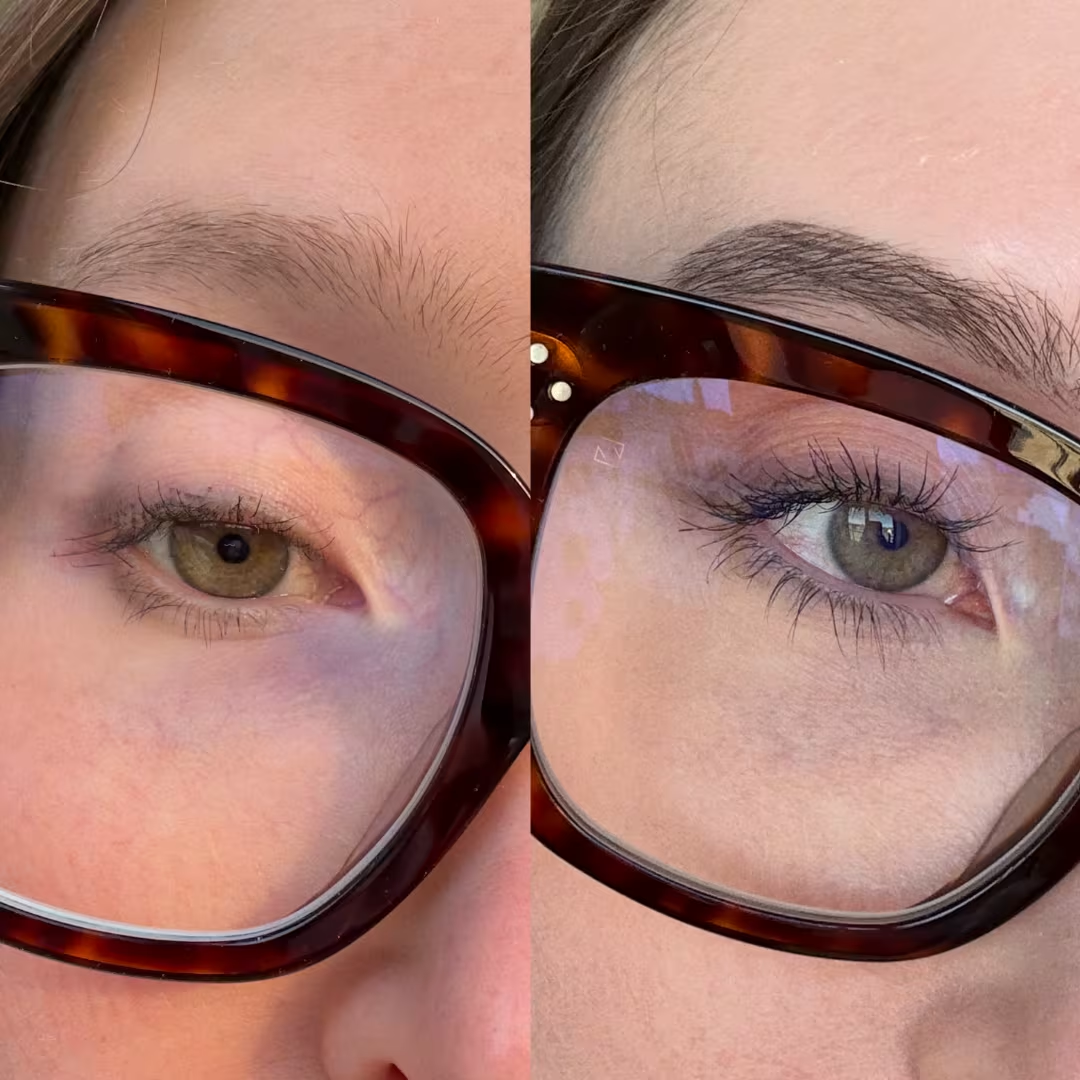
Is bimatoprost clinically proven for eyebrow growth?
Yes. Bimatoprost is best known for eyelash growth, but eyebrow-specific research also supports its use in eyebrow hypotrichosis, the medical term for inadequate or sparse eyebrow hair.
A randomised, double-blind, vehicle-controlled pilot study assessed bimatoprost 0.03% applied to the eyebrows. A later multicentre, double-masked study evaluated bimatoprost 0.03% for eyebrow hypotrichosis over several months. Other studies and reviews have also concluded that topical bimatoprost can improve eyebrow appearance in suitable patients.
The practical conclusion is straightforward: if the brow follicles are still viable, bimatoprost has better evidence for true eyebrow growth than ordinary cosmetic brow serums.
How long does eyebrow growth treatment take?
Eyebrow growth is slower than most people expect. A good brow growth treatment works through the hair cycle, so it must be used consistently before the result is obvious.
| Time using brow growth treatment | What you may notice | What is happening |
|---|---|---|
| Weeks 1 to 4 | Little visible change, although some people notice early darkening or better definition. | Follicles are being encouraged into a stronger growth phase. |
| Weeks 4 to 8 | Fine hairs may become easier to see. Sparse areas may start to look less empty. | New growth is becoming visible above the skin surface. |
| Weeks 8 to 16 | Density, darkness and shape may become more noticeable. | The cumulative effect of longer and stronger growth becomes clearer. |
| After 16 weeks | Most people can judge whether the treatment is giving the level of improvement they want. | Continued use may be needed to maintain the result. |
Some people respond faster than others. Brows affected by recent over-plucking may recover more quickly than brows affected by long-standing thyroid disease, chemotherapy, scarring or repeated trauma.
Eyebrow growth serum vs brow conditioner
A brow growth serum and a brow conditioner do different jobs. The growth treatment is aimed at the follicle. The conditioner is aimed at the hair shaft.
Growth treatment
Designed to support the brow follicle and encourage stronger visible growth. This is the role of bimatoprost-based Brow Growth Treatment.
Protection and conditioning
Designed to reduce dryness, brittleness, UV damage and breakage. This is the role of Sun Protect Lash and Brow Serum.
This distinction matters because new brow growth can still be damaged. UV exposure, makeup removal, tinting, lamination, rubbing and friction can weaken the hair shaft. Protecting brow hairs helps preserve the visible improvement you are trying to build.
Related reading on brow structure and protection
These articles explain why protecting new brow hairs matters after growth treatment.
Brow anatomy
Eyebrow structure and function
Why eyebrows matter for protection, expression and facial balance.
Growth cycle
Understanding the eyebrow growth cycle
How brow hairs grow, rest and shed over time.
UV protection
UV protection for eyelashes and eyebrows
How sunlight weakens hair fibres and why brow protection matters.
Night protection
Sleep mask for eyelashes and eyebrows
How reducing friction can help protect fragile brow and lash hairs overnight.
Can eyebrow growth treatment help over-plucked brows?
Eyebrow growth treatment can help some over-plucked brows, particularly where the follicles are still alive but producing fine, weak or short hairs. This is common after repeated tweezing, waxing or shaping.
The longer the brows have been over-plucked, the less predictable the recovery. Repeated trauma can eventually make follicles less responsive. That does not mean recovery is impossible, but it does mean expectations should be realistic.
A useful sign is the presence of fine pale hairs in the sparse area. These hairs suggest that follicles are still active. A growth treatment may help make them longer, thicker and more visible.
Thyroid, chemotherapy and medical causes of brow loss
Eyebrow thinning is sometimes a cosmetic issue, but it can also be a clue to an underlying medical or nutritional problem. This is especially true when brow loss is sudden, patchy, associated with scalp shedding, or concentrated at the outer third of the brows.
Thyroid-related eyebrow thinning
Thyroid disease is a well-known cause of eyebrow thinning, particularly thinning of the outer third of the eyebrows. The priority is to stabilise thyroid function with medical care. Once thyroid levels are controlled, brow growth treatment may help improve cosmetic regrowth where follicles remain viable.
Eyebrow loss after chemotherapy
Chemotherapy can cause eyebrow and eyelash loss because it affects rapidly dividing cells, including cells in hair follicles. Many people regrow their brows naturally after treatment, but regrowth can be slow or incomplete. Bimatoprost may be considered after treatment where appropriate and after medical suitability has been assessed.
Trichotillomania, rubbing and pulling
If brows are being pulled or rubbed, the behaviour itself needs to be addressed first. Growth treatment may support cosmetic recovery once pulling or rubbing is under better control, but it is not a treatment for the underlying behavioural condition.
Related reading on causes of eyebrow loss
Use these guides to match the treatment plan to the reason for brow thinning.
Main hub
Causes of eyebrow loss
The main companion guide to this page, covering the reasons brows become thin.
Thyroid
Eyelash and eyebrow loss from thyroid disease
How thyroid imbalance can affect lashes and brows.
Hypothyroidism
Hypothyroidism eyebrows
Why the outer third of the brow can thin in underactive thyroid disease.
Chemotherapy
Eyebrow loss from chemotherapy
What happens to brow follicles during chemotherapy and how recovery works.
Trichotillomania
Regrowing after trichotillomania
How lash and brow growth support can fit into recovery after pulling.
Weight loss injections
Eyelash and eyebrow loss from weight-loss injections
How rapid weight loss, nutrition and GLP-1 treatment can affect brows and lashes.
Is eyebrow growth treatment safe?
Bimatoprost has been used for many years in eye medicine and has clinical evidence for eyelash and eyebrow growth. For many people it is well tolerated when used correctly. However, it is a potent active ingredient, not a simple cosmetic oil, and it is not suitable for everyone.
Possible side effects include skin irritation, redness, itching, unwanted hair growth where the solution spreads, darkening of skin around the application site, dry eye symptoms, and eye irritation if the product gets into the eye. People with eye disease, active eye inflammation, glaucoma, macular oedema, previous eye surgery, pregnancy or breastfeeding should be particularly cautious.
This is why Opti Laboratories Brow Growth Treatment is doctor reviewed. Suitability matters, especially when a treatment is used close to the eyes.
How to apply brow growth serum
Correct application is important. The aim is to apply a small amount precisely to the sparse brow area, not to flood the skin or allow the solution to run towards the eye.
- Start with clean, dry skin.
- Remove any makeup from the brow area so that you are applying to bare skin.
- Put the smallest possible amount of liquid onto the precision applicator.
- Run the applicator over the area where you want stronger brow growth, at the skin at the base of the brow hair.
- Blot away excess solution if the skin looks wet or overloaded.
- Use consistently as directed.
More is not better. Over-application increases the chance of irritation or unwanted hair growth outside the intended brow area.
We provide a detailed application guide with your order as well as videos to help you get the best result.
Why choose Opti Laboratories Brow Growth Treatment?
Opti Laboratories is a doctor-led UK brand specialising in eyelash and eyebrow growth. Dr Tom Walker founded Mylash in 2007 and has spent nearly two decades helping clients improve their natural lashes and brows.
Our Brow Growth Treatment contains bimatoprost 0.3 mg/ml, also written as 0.03%. Each order is reviewed through an online medical form, and the treatment is supplied with clear instructions for careful use.
Doctor reviewed
Orders are reviewed by UK doctors, because suitability and safe use matter around the eyes.
Specialist experience
We specialise in lash and brow growth rather than treating brow products as a cosmetic afterthought.
Evidence-led
Our treatment approach is based on clinical evidence, follicle biology and practical client experience.
Complete care
We support growth, protection and maintenance with products designed specifically for lashes and brows.
Ready to start regrowing your brows?
Opti Laboratories Brow Growth Treatment is a doctor-reviewed bimatoprost 0.03% treatment for fuller-looking brows where suitable.
Complete your brow routine
Growth, daytime protection and night-time protection work best when each part has a clear role.
Growth
Brow Growth Treatment
Bimatoprost 0.03% brow growth treatment reviewed by doctors.
Bundle
Ultimate Brow Bundle
Growth treatment with daytime and night-time support for brows.
Daytime protection
Sun Protect Lash and Brow Serum
World-first UV protection and conditioning support for lashes and brows.
Night care
Lash and Brow Protecting Sleep Mask
A silk sleep mask designed to reduce friction and avoid pressure on brows and lashes.

About the author
Dr Tom Walker
Dr Tom Walker is one of the founders of Opti Laboratories, the successor to Mylash which he founded in 2007. He graduated from the University of Glasgow with degrees in medicine and anatomy. His work has been featured in publications including The Times newspaper and Vogue magazine. He has a passion for bringing innovative and evidence-based treatments to the market. The eyelash and eyebrow growth treatment he introduced is the only clinically proven growth treatment available.
Frequently asked questions
What is the best eyebrow growth treatment?
The best eyebrow growth treatment depends on the cause of thinning. If the follicles are still viable and the aim is true brow growth, bimatoprost has stronger clinical evidence than ordinary cosmetic brow serums. If the brows are mainly dry or brittle, a conditioning serum may also help.
Do eyebrow growth serums really work?
Some do and some do not. Many over-the-counter eyebrow serums mainly condition existing hairs. Bimatoprost-based brow growth treatments act at the follicle level and have clinical evidence for improving eyebrow hypotrichosis.
What is the difference between eyebrow growth serum and brow conditioner?
An eyebrow growth serum is intended to support the follicle and improve visible growth. A brow conditioner mainly protects and smooths the hair shaft, helping existing brow hairs look healthier and reducing breakage.
Can bimatoprost grow eyebrows?
Yes, bimatoprost can support eyebrow growth where follicles remain viable. Clinical studies have assessed bimatoprost for eyebrow hypotrichosis and found improvement in eyebrow appearance in suitable users.
How long does eyebrow growth treatment take?
Some people notice early changes after 4 to 8 weeks, but fuller results are usually judged after 12 to 16 weeks. Slower cases, such as long-standing thyroid-related thinning or old over-plucking, may take longer.
Can eyebrow growth treatment help over-plucked brows?
Yes, it may help if the follicles are still alive. Fine pale hairs in the sparse area are a good sign that follicles remain active. If repeated plucking has permanently damaged the follicles, regrowth is less predictable.
Can eyebrow growth treatment help thyroid eyebrow loss?
It may help cosmetically once the thyroid condition is medically controlled. Thyroid-related eyebrow loss should first be assessed and managed by a doctor. After thyroid levels are stable, bimatoprost may support brow regrowth where follicles remain viable.
Is bimatoprost safe for eyebrows?
Bimatoprost is well tolerated by many people when used correctly, but it can cause side effects and is not suitable for everyone. Possible effects include irritation, redness, skin darkening and unwanted hair growth where the solution spreads. Doctor review is important.
What happens if I stop using eyebrow growth treatment?
If you stop using a bimatoprost-based eyebrow growth treatment, the growth effect gradually wears off as the brow hairs pass through their normal growth cycle. Brows are expected to return towards their natural baseline over time.
Can I use lash growth treatment on eyebrows?
You should use a product and instructions intended for the area being treated. Eyebrows and eyelashes have different application needs, and treatment close to the eye should be used carefully and only as directed.
Can I use eyebrow growth serum with microblading or brow lamination?
Usually yes, but timing matters. The skin should be fully healed after microblading before applying growth treatment. After lamination, wait until any irritation has settled and avoid applying treatment to broken or inflamed skin.
What should I do if my eyebrow loss is sudden or patchy?
Sudden, patchy, painful, inflamed or unexplained eyebrow loss should be assessed by a healthcare professional before starting a cosmetic growth treatment. Possible causes include alopecia areata, thyroid disease, infection, inflammation, medication effects or nutritional deficiency.
Clinical references and further reading
The following sources support the clinical, safety and hair-loss information discussed in this guide.
| Topic | Source | Why it is relevant |
|---|---|---|
| Eyebrow-specific bimatoprost study | Beer KR et al. Treatment of eyebrow hypotrichosis using bimatoprost | Randomised, double-blind, vehicle-controlled pilot study of bimatoprost 0.03% for eyebrow hypotrichosis. |
| Multicentre eyebrow hypotrichosis study | Carruthers J et al. Bimatoprost 0.03% for the treatment of eyebrow hypotrichosis | Large clinical study assessing bimatoprost 0.03% for sparse eyebrows. |
| Bimatoprost 0.01% vs 0.03% | Suchonwanit P et al. Bimatoprost concentrations for eyebrow hypotrichosis | Comparative eyebrow study finding both 0.01% and 0.03% effective, with 0.03% superior. |
| Review of bimatoprost for eyebrows | Chanasumon N et al. Therapeutic potential of bimatoprost for eyebrow hypotrichosis | Review discussing mechanism, evidence and safety for eyebrow use. |
| Bimatoprost safety and side effects | DailyMed: LATISSE bimatoprost solution | Official label information including warnings and common adverse reactions. |
| General causes of eyebrow loss | Opti Laboratories: Causes of eyebrow loss | Companion hub page explaining ageing, over-plucking, thyroid disease, nutrition, chemotherapy and other causes. |
| Thyroid-related eyebrow loss | British Thyroid Foundation: Hair loss and thyroid disorders | Explains that thyroid-related scalp and eyebrow hair loss is often temporary but regrowth can take months. |
| Alopecia affecting brows | American Academy of Dermatology: Hair loss causes | Explains that alopecia areata can affect eyebrows and eyelashes as well as scalp hair. |
| Chemotherapy and eyebrow loss | Cancer Research UK: Hair loss, hair thinning and cancer drugs | Explains that chemotherapy-related hair loss can include eyebrows and eyelashes. |
| Opti Laboratories product | Opti Laboratories Brow Growth Treatment | Doctor-reviewed bimatoprost 0.03% brow growth treatment. |
This article is for educational purposes and does not replace individual medical advice. Persistent, sudden, painful, patchy or unexplained eyebrow loss should be assessed by your GP or a dermatologist.