

Why brows can become finer with age, when thinning may need medical assessment, and what can help support fuller-looking brows.
Many women notice that their brows become sparser, finer or less defined as they move through their forties and beyond. The change is often gradual. The tail of the brow may look lighter, gaps may become more obvious, and the shape that once framed the eyes can begin to look less distinct.
It is easy to dismiss this as a minor cosmetic issue. Eyebrows have a significant effect on facial expression, balance and definition. Even relatively modest thinning can make the face look more tired, less structured or simply less familiar.
Ageing is one common reason for eyebrow thinning but it is not the only one. Hormonal transition, past over-plucking, repeated cosmetic treatments, thyroid disease, nutritional stress, medication changes and hair shaft breakage can all play a part.
The useful question is not simply “How can I make my brows look thicker?” It is:
“Why have my brows become thinner, and what type of help is most appropriate?”
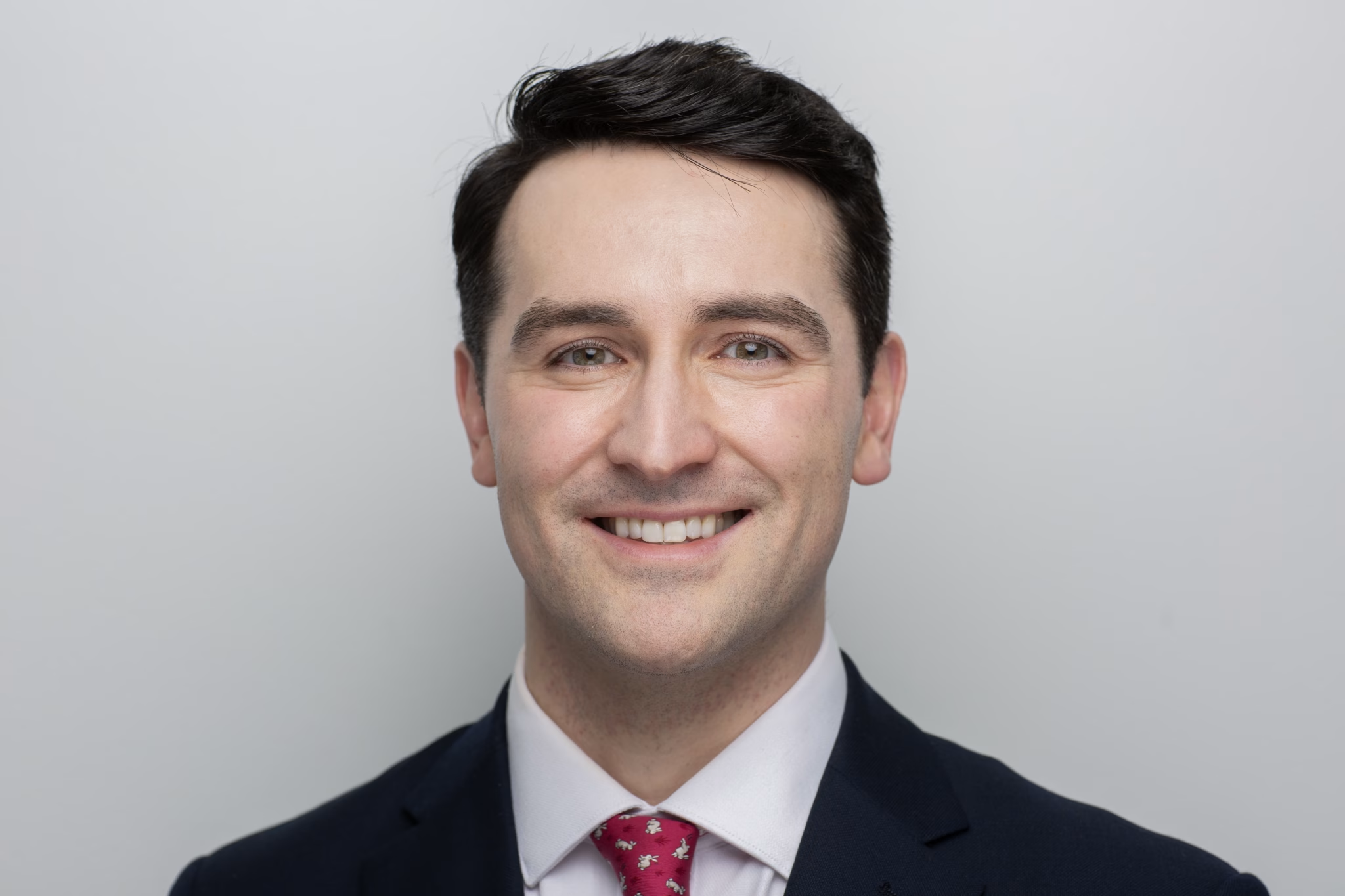
“As a doctor and one of the founders of Opti Laboratories, I have spent nearly two decades working in the eyelash and eyebrow sector. During that time I have spoken with thousands of clients seeking help for thinning brows caused by ageing, over-plucking, thyroid disease, chemotherapy, trichotillomania and other causes.”
Gradual brow thinning after 40 is often caused by a mixture of age related follicle change, hormonal transition, past over plucking catching up and more fragile brow hairs. But not every change should be assumed to be ageing or menopause.
Often fits age related change, hormonal transition or cumulative cosmetic stress.
Needs a broader look at thyroid, skin, medication and other possible causes.
Often encouraging as it suggests that the eyebrow follicles or vellus hairs are still capable of responding.

Hair follicles don’t behave in exactly the same way throughout life. As we age our eyebrow hairs spend less time in the growth phase of the hair cycle. They start to grow more slowly, become finer and start to lose some pigment. The result is often a brow that looks less dense even when there hasn’t been dramatic hair loss.
This is particularly noticeable in eyebrows because they’re naturally short, fine hairs to begin with. A small reduction in thickness or density can alter the outline of the brow.
The cumulative effect of earlier habits can also become clearer with time. Years of over plucking, tinting, lamination, UV exposure and rubbing can leave the brows more vulnerable. A brow that could bounce back easily at 25 from over plucking may not recover in quite the same way at 45 or 55.
Age related eyebrow thinning is therefore often a combination of slower follicle activity, more fragile hairs and our cosmetic history catching up with us.
Perimenopause and menopause are times when many women notice changes in skin, hair texture and hair density. Hormonal change can make an existing tendency towards thinner brows more noticeable, particularly where the brows were already affected by over plucking or hair shaft damage.
Eyebrow thinning should not automatically be assumed to be caused by menopause.
Menopause is one possible part of the picture but it does not explain every pattern of brow loss. Sudden thinning, marked loss of the outer brow, patchy areas, scalp hair loss, skin inflammation or symptoms such as fatigue, weight change and dry skin could all be related symptoms.
The best approach is usually to treat menopause as context rather than a diagnosis and we should not consider menopause as a disease that requires a cure. It may help explain why a gradual brow change has become more visible but it should not prevent someone from talking to their GP if other symptoms are present.
The pattern of eyebrow thinning can provide useful clues.
Brows becoming thinner and less defined over years fits age related change,
hormonal transition or a previous over plucking.
Loss at the tail of the brow can occur with age or past plucking but it is also
associated with thyroid disease and is worth talking to your GP about.
This can point more towards breakage due to trauma from cosmetic treatments, or friction overnight from rubbing.
Patchy, smooth or asymmetrical loss is less typical of simple ageing and deserves proper assessment from your GP.
When brow change occurs alongside wider hair shedding, weight change or
fatigue, consider a more general trigger rather than treating brows alone. Discuss with your GP.

This is often a slow reduction in density and definition over the years. The brows may look sparser, lighter or less sharply shaped but there should not be obvious bald patches.
Many women in their forties, fifties and sixties have a long history of tweezing or reshaping their brows. Aggressive plucking can weaken follicles over time by encouraging the hairs to enter a quiescent state. Some hairs may grow back more finely or take a while to regrow. Unfortunately some never regrow.
Thyroid problems are well known medical causes of eyebrow thinning. Loss of density in the outer third of the brow is particularly associated with hypothyroidism although this pattern is not exclusive to thyroid disease.
If eyebrow thinning occurs alongside fatigue, weight change, dry skin, cold intolerance, scalp shedding or menstrual changes, it is sensible to talk with your GP rather than assuming the change is purely cosmetic.
The hair growth cycle can be disrupted by restrictive dieting, illness, low nutrient intake or rapid weight loss. Thinning eyebrows while using weight loss injections is something we are seeing on a regular basis. Eyebrow thinning may sometimes occur alongside scalp shedding, brittle hair, tiredness or poor recovery after illness.
Supplements are rarely the easy answer. If nutritional deficiency is suspected it is better to identify the cause and address it properly.
Certain hormone treatments, retinoids, blood-pressure medicines, cholesterol-lowering medicines, anticoagulants, some antidepressants and anti-epileptic drugs are examples of commonly prescribed treatments that can thin the brows.
Essential medicines should never be stopped without medical advice, but you can support growth to help in these situations
Sometimes eyebrows look thinner because hairs are breaking rather than because follicles have stopped producing hair.
Repeated cleansing, makeup removal, brow lamination, tinting, bleaching, brow pencils, gels, rubbing and UV exposure can all contribute to dryness and breakage. In this situation protecting the existing hair shaft can give a good cosmetic result.

In many cases, yes.
The main question is whether the follicles are still viable. If there are fine, pale or short hairs in the area then that is an encouraging sign. It suggests that active follicles are present even if the visible brow looks sparse.
Regrowth is more likely when:
Recovery is slower where brows have been thin for many years, where follicles have been repeatedly damaged, or where there is an untreated medical or inflammatory cause.
The realistic aim is not always to recreate the brows of a teenager. It is to support the healthiest, fullest-looking brow that the remaining follicles are capable of producing.
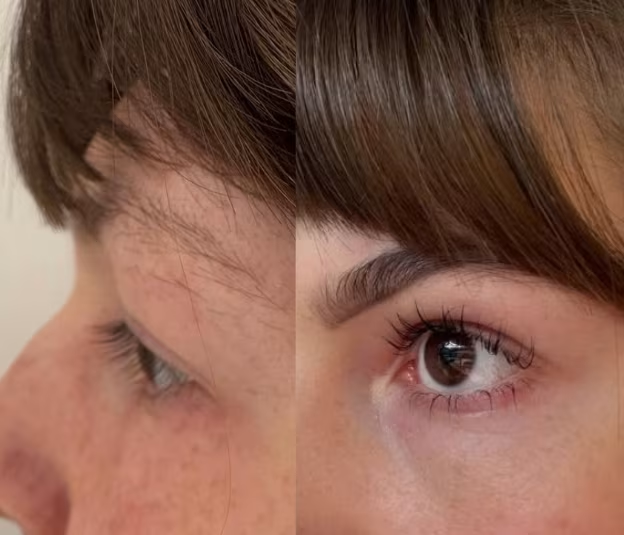
We have helped many clients significantly increase the thickness and density of their eyebrows over the years, even after serious illness or long periods of brow loss.
These examples show the type of visible brow improvement that can occur when follicles respond well to treatment and are given enough time to complete several growth cycles. Individual results vary.


The best strategy depends on the reason the brows are thin.
If thinning is sudden, patchy, associated with scalp hair loss or accompanied by other symptoms, address the underlying medical issue first.
This may mean reviewing thyroid health, nutrition, illness, weight change, medication timing, skin inflammation or a repetitive rubbing or pulling habit.
If brow hairs are dry, fragile, sun-exposed or cosmetically stressed, reducing damage can make a visible difference.
Gentler cleansing, less aggressive makeup removal, limiting repeated cosmetic trauma and using a protective conditioning product may help preserve the hairs already present.
This may mean reviewing thyroid health, nutrition, illness, weight change, medication timing, skin inflammation or a repetitive rubbing or pulling habit.
If the main problem is sparse brows, reduced density or a history of over plucking then a follicle stimulating growth treatment may be more appropriate than a cosmetic conditioner.
A true brow growth treatment is designed to support the active growth phase of the follicle. This is different from simply coating, protecting or conditioning the hair shaft.
Conditioning and protective serums still have an important role. They can help reduce dryness, brittleness and breakage to help the brows to look healthier while a growth treatment does its separate job.
True brow improvement is gradual. Many people notice improved condition first. More convincing visible fullness often takes several months, especially where the starting point is sparse or the brows have been thinning for years.
Realistic results timeline
Real eyebrow growth is slow. That is simply the biology of the follicle. Some people begin to notice early changes after around 4 to 6 weeks, particularly where fine hairs were already present. Fuller visible results usually take more like 12 to 16 weeks.
Smoother, better-conditioned hairs and less dryness or brittleness. Often the first new hairs appear.
Early visible improvement in sparse areas, especially where fine hairs were already present.
More convincing fullness, greater visible density and better brow definition.
Peak visible improvement as multiple growth cycles progress.
Results gradually reduce as the follicles return towards their usual cycle.
Important: Many users stop too early. Four weeks may be enough to notice the start of growth, but it is often not enough to see the full results of the growth treatment.
It is sensible to seek medical advice if eyebrow thinning is:
Cosmetic treatment can be useful, but it should not replace assessment of persistent or unexplained hair loss.
Eyebrow thinning after 40 is common but it should not be dismissed as something you simply have to accept.
For most it is mainly age related change. For others, menopause may make an existing tendency more obvious. There may be a correctable factor such as thyroid disease, nutritional stress, medication related shedding, over plucking or repeated breakage.
If the follicles need support, use a genuine growth treatment. If the hairs are fragile, protect and condition them. If the pattern is unusual, sudden or linked with other symptoms then it is important to investigate the cause.
That is a more sensible approach than treating every thin brow with the same cosmetic serum.
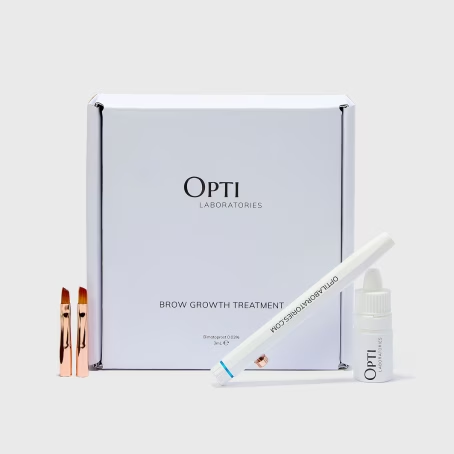
Our clinically proven, prescription strength brow growth treatment has been our gold standard treatment since we started in 2007.
Each pack includes the treatment and applicators, and lasts most people around three months with careful use.
Gradual eyebrow thinning becomes more common with age. Brow hairs may grow more slowly, become finer or lose density over time. However, sudden, patchy or marked thinning should not automatically be assumed to be normal ageing.
Hormonal transition around perimenopause and menopause may make brow thinning more noticeable, especially where there is already age-related change, past over-plucking or fragile hair. However, menopause is not the only possible explanation, so unusual or rapid thinning should be assessed more broadly.
Outer eyebrow thinning can occur with age and past plucking, but it is also associated with thyroid disease. If the outer third of the brows becomes noticeably thin, especially alongside fatigue, weight change, dry skin or scalp shedding, medical assessment is sensible.
They often can if the follicles are still viable and the underlying trigger has been addressed. Fine, pale or short hairs in a sparse area can be a reassuring sign that the follicle remains capable of responding.
It can be either. Longer gaps with very few visible hairs may suggest reduced follicular growth. Short, uneven or frayed hairs are more suggestive of breakage from dryness, rubbing, cosmetic treatments or repeated cleansing.
Seek advice if thinning is sudden, patchy, one-sided, associated with scalp hair loss, linked with skin inflammation or accompanied by symptoms such as fatigue, weight change, dry skin, cold intolerance or menstrual change.
The right treatment depends on the cause. Once medical or lifestyle triggers have been addressed, a follicle-level brow growth treatment may help where the main issue is sparse growth. Conditioning and protective products can help where breakage, dryness or cumulative damage are more important.
A conditioning serum can improve softness, flexibility and resistance to breakage. This may make the brows look healthier, but it is not the same as a true growth treatment designed to support follicle-level stimulation.
Opti Laboratories is a UK-based, doctor-led company specialising in eyelash and eyebrow growth. Dr Tom Walker founded Mylash in 2007 and later developed Opti Laboratories as its scientific successor.
Our work has been featured in publications including Vogue, Grazia, The Times and Cosmopolitan. We help clients seeking cosmetic enhancement, as well as those recovering from eyelash or eyebrow thinning linked to thyroid problems, chemotherapy, trichotillomania, medications, weight-loss
injections, cosmetic damage and age-related changes.
Opti Laboratories is a UK-based, doctor-led company specialising in eyelash and eyebrow growth. Dr Tom Walker founded Mylash in 2007 and later developed Opti Laboratories as its scientific successor.
Our work has been featured in publications including Vogue, Grazia, The Times and Cosmopolitan. We help clients seeking cosmetic enhancement, as well as those recovering from eyelash or eyebrow thinning linked to thyroid problems, chemotherapy, trichotillomania, medications, weight-loss
injections, cosmetic damage and age-related changes.
If you would like a broader guide to eyebrow growth treatments, including how they work, who they are suitable for and what results to expect, read our main eyebrow growth treatments guide.