
Yes but timing and design matter. For the first 24 hours, follow your technician’s own protocol. Afterwards a deep cup sleep mask can help avoid unnecessary pressure and friction against freshly lifted lashes.
THE SHORT ANSWER
A lash lift changes the direction of your own natural lashes. During the first 24 hours, the safest approach is to avoid any sleep mask that rests directly over the eye area or could press the lashes into an unwanted direction.
A mask with genuine clearance around the eyes is a sensible choice. The important feature is not simply silk: it is a design that keeps the inner surface away from the lashes when you blink, move your face and change position during sleep.
Important: your lash technician’s instructions always take priority. Different lifting systems use different protocols, so do not override their advice simply because another salon has given different aftercare rules.
TIMING MATTERS
Lash lift aftercare is not identical between professionals. The common principle is simple: give the lashes a quiet start. Avoid rubbing, pulling, face-down pressure, heavy eye products and anything that makes you repeatedly touch the eye area.
Try not to touch the area and do not apply any makeup or products to the area - this includes face creams, eyeliner or mascara. Try to avoid very warm or humid places, as this may interfere with the adhesive.
Follow the exact instructions given by your technician. Continue to avoid contact, heat, steam, products or eye-area pressure for this first 24 hour period. Avoid any conventional sleep mask that touches the lashes or presses over the eyelids. A dark room, blackout curtain or keeping light sources away from the bed is the lower-risk option while your initial aftercare window is still active. If possible, try to sleep on your back.
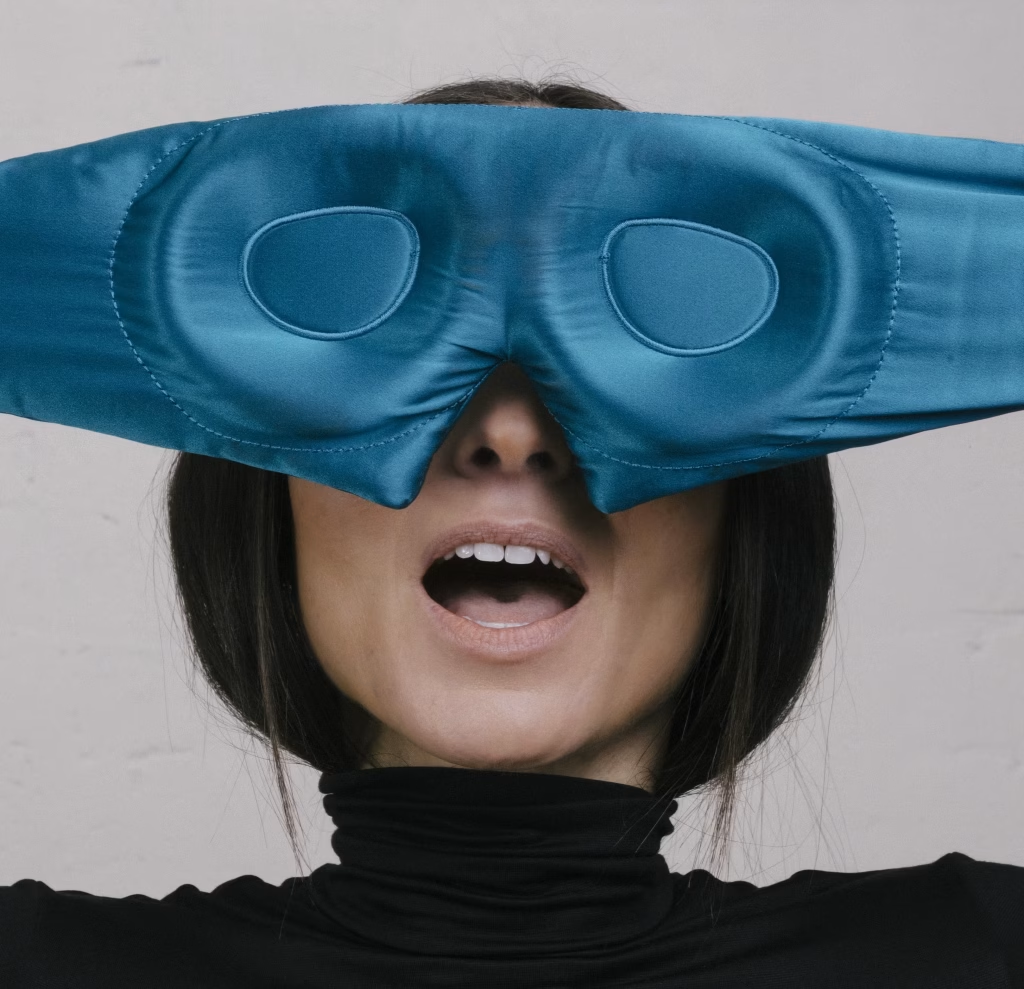
Once the initial aftercare period has passed, choose a mask with deep eye cups, a stable fit and a smooth inner surface. The aim is to avoid adding unnecessary compression to lashes that you have just paid to have lifted and defined.
Waking on your side does not mean you have ruined your lash lift. Once you are clear to handle the lashes, you can carefully brush them upward rather than pulling, curling or trying to force them back into position.

A lash lift does not add false lashes. It reshapes your own lashes, creating a more open, upward-looking curl from the base of each hair. That makes a lift beautifully natural-looking, but it also means the visible result depends on the lashes sitting in a neat direction.
A flat mask can press across the eyelids. For some people, particularly side and front sleepers, that may leave lashes looking crossed, flattened or temporarily misdirected in the morning. The practical concern is not that a mask can instantly “undo” a professionally performed lift. It is that unnecessary contact is an avoidable source of pressure and friction.
Lashes are fine keratin fibres with a protective outer cuticle. Repeated mechanical stress can make any hair look less neat and, when the hair is already dry or over-processed, more vulnerable to breakage. For a deeper explanation, see our guide to eyelash structure and what can damage it.
A measured point: a sleep mask is not a clinical treatment for a lash lift and cannot guarantee how long a lift will last. The rationale is practical: minimise direct pressure on lashes once you are past the aftercare period.
WHAT TO LOOK FOR
The mask should have eye cups deep enough to leave space between the lining and your lashes. A soft mask that still lies against the lashes is not truly protective.
A mask that migrates upwards, downwards or sideways during sleep can create pressure at the lash line. Look for a shaped fit and an adjustable strap that spreads the pressure rather than thin, elastic that cuts into your hair.
Once you have the clearance right, the contact surface matters. A smooth silk lining gives a gentle and breathable interface around the eye area than rougher or synthetic fabrics.
| Mask type | What it does well | Potential issue after a lash lift |
|---|---|---|
| Flat silk mask | Smooth fabric and a luxury feel. | Silk cannot prevent pressure if the fabric sits directly on the lashes. |
| Shallow padded mask | May block light more effectively than a flat mask. | Padding can still press the lash line if the cups are not sufficiently deep. |
| Anatomically designed deep cup silk mask | Combines clearance around the lashes with a smooth fabric surface. | It must fit correctly and should only be introduced after your technician’s aftercare period. |

PROTECT THE RESULT
BY DAY
Once the initial aftercare period has passed, daytime care should focus on keeping the lashes conditioned and protected from the environmental factors that damage your hair.
Our guide to using a serum after a lash lift explains why UV protection and conditioning matter, particularly when your lift includes a tint.
BY NIGHT
An anatomically designed deep cup mask gives you a way to block light without fabric resting over your lifted lashes. This is particularly useful for side sleepers and anyone who wakes to find their lashes knocked out of place overnight.
For broader advice on extensions, brows, silk and sleep-mask shape, see our complete guide to sleep masks for eyelashes and eyebrows.
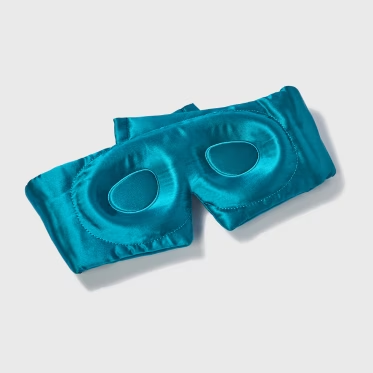
Doctor designed with deep padded eye cups to help keep the mask away from your lashes
and brows. Finished in 22 momme ethically sourced mulberry silk, with an adjustable fit for side, back
and front sleepers.
Free UK delivery · Includes storage box · Washable
WHEN TO PAUSE
A sleep mask is for comfort and protection and not for covering an irritated eye. If your eye feels painful, very red, swollen, unusually sensitive to light or uncomfortable after a lash lift then do not ignore this.
Contact the technician who performed your treatment for non urgent aftercare concerns. For eye pain, marked redness, sensitivity to light or any change in vision, seek urgent advice from your GP or family doctor.
FREQUENTLY ASKED QUESTIONS
Yes, but ideally the mask should not touch the
lashes. Most people should avoid a mask that sits against the eye area at least on the first night
because freshly lifted lashes can be pressed into an unwanted direction. A dark room or
blackout curtain is the lower-risk option during that initial period if you normally wear a mask that is not eyelash protecting.
The initial aftercare window is commonly
24 hours. Once that period has passed, choose a mask with deep eye cups that keeps
the lining away from the lashes when you blink and move your face.
A sleep mask is unlikely to fully undo a professionally performed lash lift by itself, but a
flat or tight design can press the lashes and leave them sitting unevenly or create
unnecessary friction. The risk is greatest in the first day or two after treatment.
Silk provides a smoother surface than many fabrics, but it cannot prevent compression if
the mask lies directly on the lashes. The most important feature is clearance around the
eye area; silk not catching the eyelash is the secondary benefit.
Do not apply a serum until your technician’s initial aftercare period has passed. After
that, use a product suitable for the eye area and follow its directions. A conditioning
and UV protective serum can then form part of your daytime lash care routine which many find prolongs the results.
Do not pull or curl them. Once the aftercare period has passed, use a clean spoolie to
brush the lashes gently upward. If they remain markedly uneven, contact the technician
who performed the treatment rather than trying to correct them yourself.
Seek urgent advice from your doctor if you have eye pain, marked
redness, sensitivity to light or any change in vision. Do not cover an irritated eye with
a sleep mask.

WRITTEN BY DR TOM WALKER
Dr Tom Walker is one of the founders of Opti Laboratories, the scientific successor to Mylash, which he founded in 2007. He graduated from the University of Glasgow with degrees in medicine and anatomy, and has spent nearly two decades helping clients grow, protect and restore their eyelashes and eyebrows.
Opti Laboratories is a UK-based, doctor-led company specialising in eyelash and eyebrow growth. Our work has been featured in publications including Vogue, Grazia, The Times and Cosmopolitan. We help clients seeking cosmetic enhancement, as well as those recovering from eyelash or eyebrow thinning linked to thyroid problems, chemotherapy, trichotillomania, medications, weight loss injections, cosmetic damage and age-related changes.
Opti Laboratories is a UK-based, doctor-led company specialising in eyelash and eyebrow growth. Dr Tom Walker founded Mylash in 2007 and later developed Opti Laboratories as its scientific successor.
Our work has been featured in publications including Vogue, Grazia, The Times and Cosmopolitan. We help clients seeking cosmetic enhancement, as well as those recovering from eyelash or eyebrow thinning linked to thyroid problems, chemotherapy, trichotillomania, medications, weight-loss
injections, cosmetic damage and age-related changes.
If you would like a broader guide to eyelash growth treatments, including how they work, who they are suitable for and what results to expect, read our main lash growth treatments guide.